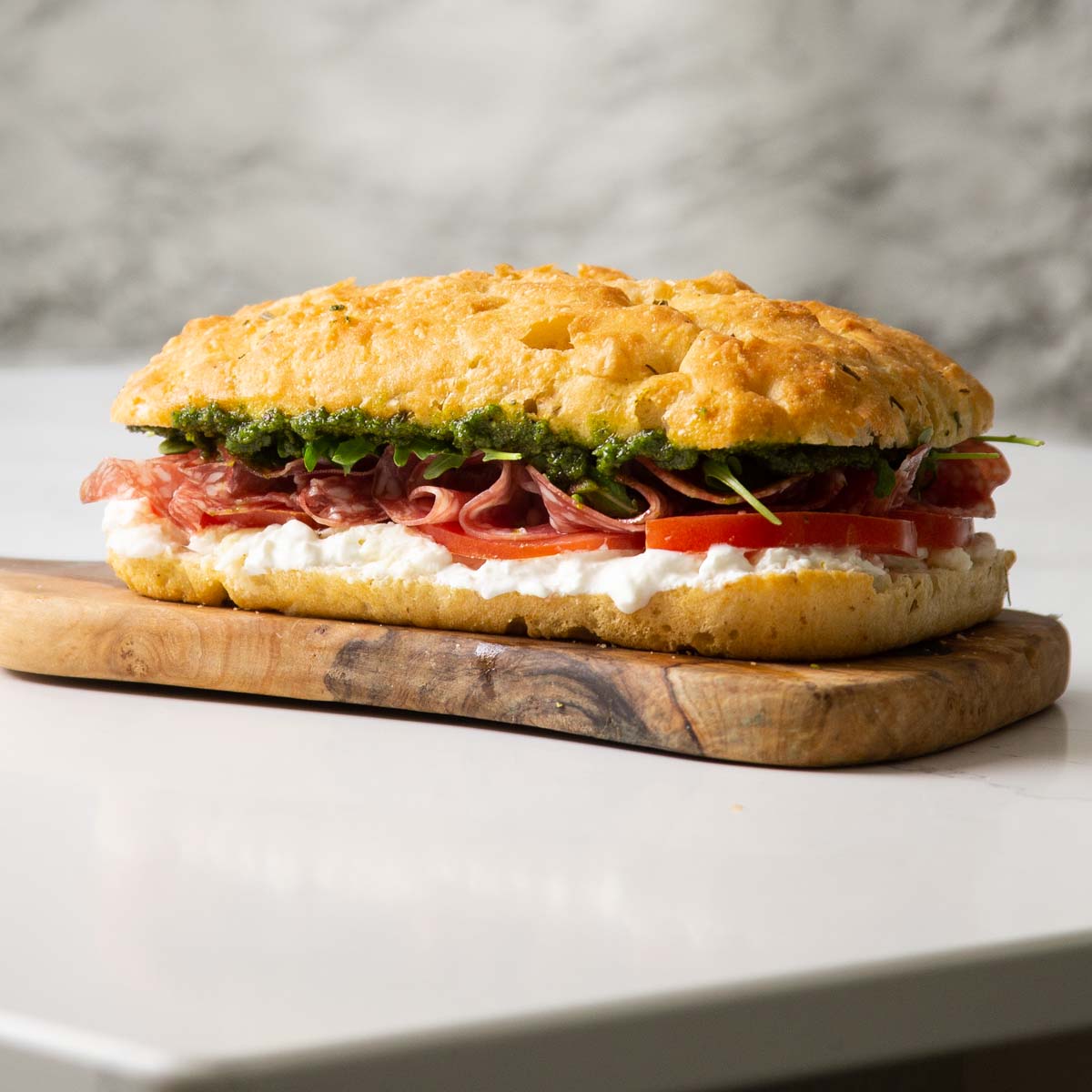
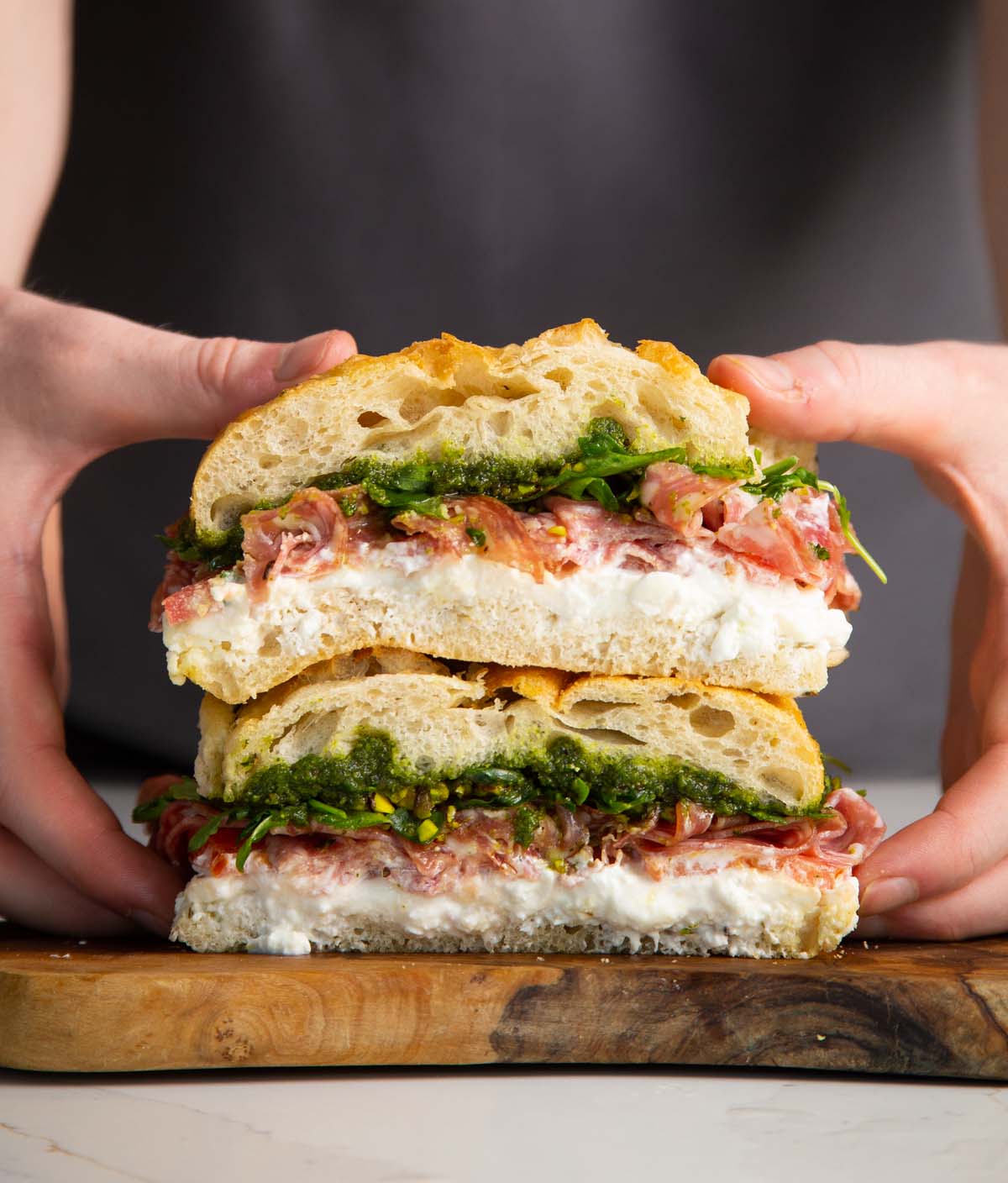
This Italian focaccia sandwich is fresh, flavour-packed and surprisingly easy to make. Perfect for lunch, picnics or whenever youâre craving something a little more special.
With so many different focaccia sandwich recipes, ‘what makes this one so special?’ I hear you cry! Don’t worry, you’re in safe hands. I have recently got back from eating my way through Italy and spent a lot of time studying the food, especially the sandwiches. Boots on the ground journalism, if you will. And I’m happy to report, upon arriving back home, I have created the perfect Italian-inspired focaccia sandwich. Follow me…
Tuscan-inspired Sandwiches
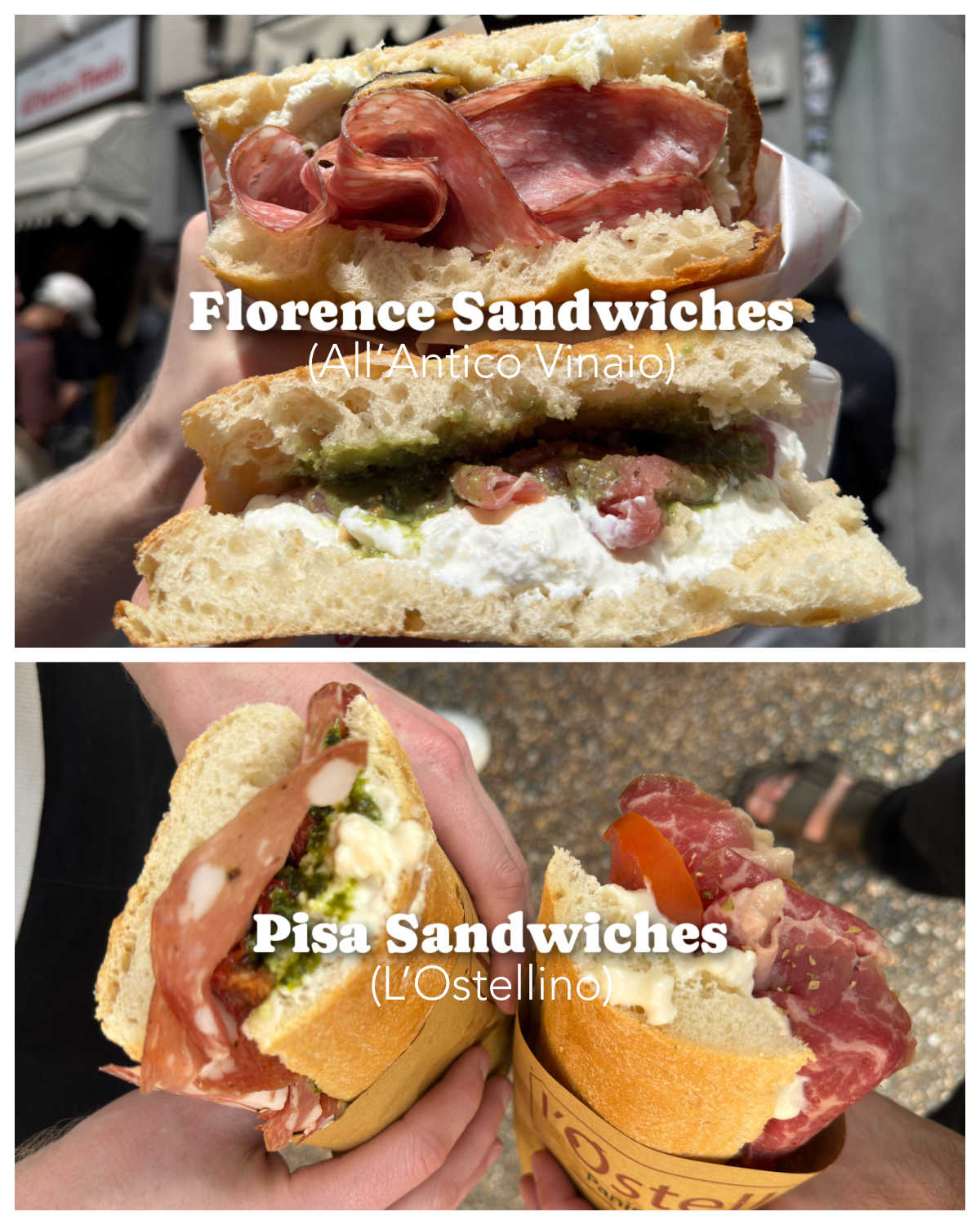
Two of the best sandwiches I ate were from Florence (at All’Antico Vinaio) and Pisa (at L’Ostellino). Although the menus offered dozens of different combinations, there were a few common themes when it came to the sandwiches.
- One quality cured meat was usually the star â Most sandwiches focused on a single meat, such as mortadella, salami, prosciutto or finocchiona, rather than piling in multiple meats.
- Creamy fillings balanced the saltiness â Burrata, stracciatella and soft cheese spreads appeared again and again.
- Pistachio was everywhere â Often in the form of pistachio pesto or crushed pistachios.
- Simple ingredient combinations â Most sandwiches relied on just a handful of ingredients rather than lots of toppings.
- Fresh ingredients took priority â Rocket (arugula), tomatoes and other fresh additions were common.
Focaccia Sandwich Ingredients
Alright, so after the eating/studying, here’s what I ended up with:
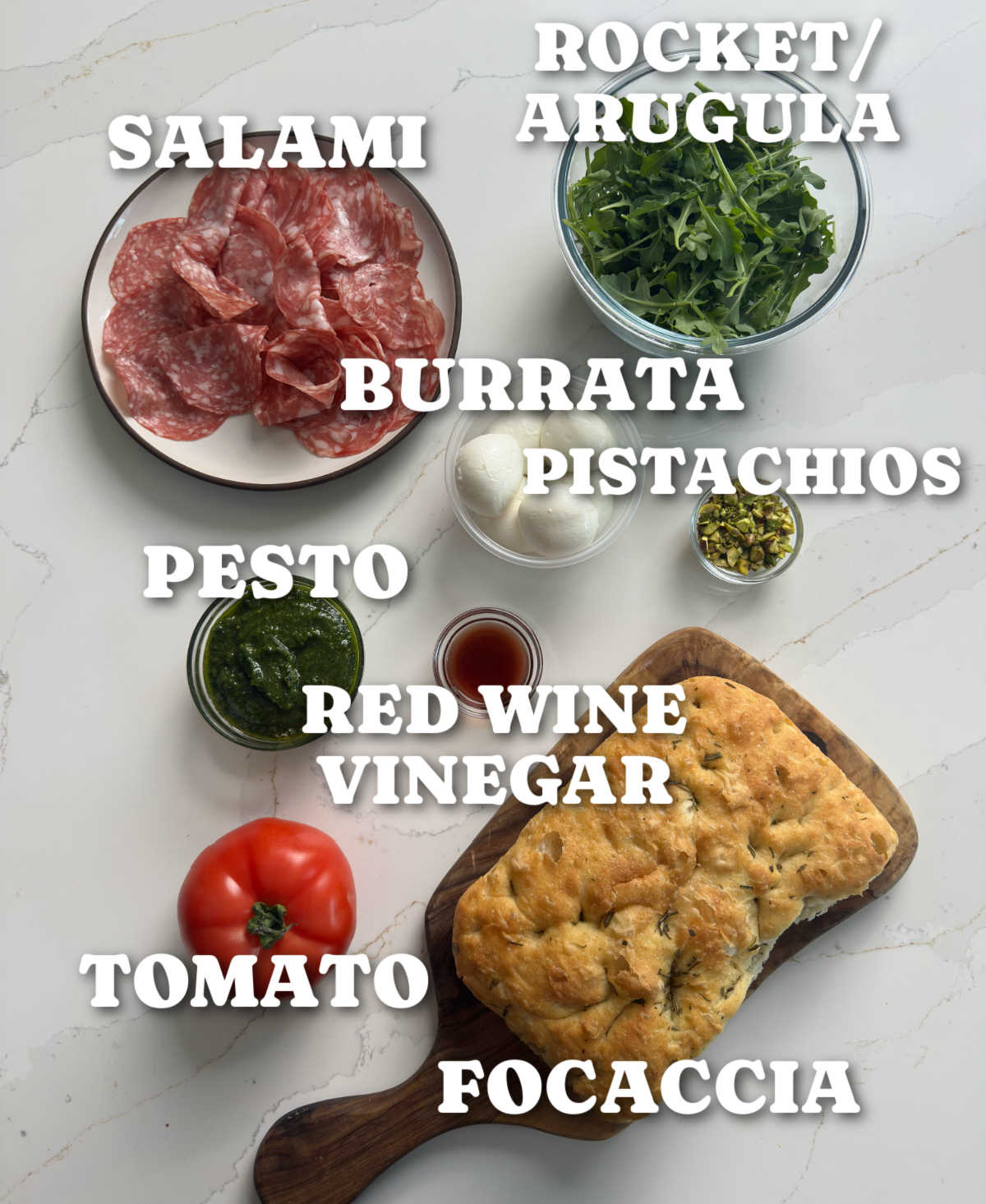
- Focaccia – typically Schiacciata is used in many places, so use that if you can. Focaccia is much more accessible here though.
- Burrata – keeping in line with the creamy aspect of the sandwich, I open up a ball of burrata and distribute it across the base slice of bread. If you can find Stracciatella (what the inside of burrata is called), then use that!
- Tomatoes – these add a layer of freshness to break up the rich, salty flavours of the sandwich.
- Vinegar – I love brushing the tomatoes with vinegar to really bring them to life. The faint acidic flavour also helps balance all the other flavours in the sandwich.
- Salami – I settled with using salami because it brings plenty of salty, savoury and spicy flavour, but without overpowering the other ingredients.
- Rocket/Arugula – the peppery flavour helps cut through the richness of the meat, cheese and pesto. This was also common in many of the sandwiches I saw in Italy.
- Pistachios – keeping in line with the heavy use of pistachios in Italian sandwiches. They add texture and nice little pops of flavour.
- Pesto – I like to make my own pistachio pesto, but you could use store-bought regular basil pesto if you’d prefer.
How to make a Focaccia Sandwich
Yes, as you can imagine, making the sandwich is pretty straightforward. BUT, there are a few tips and tricks to making it elite:
- Season – yes, the salami is going to add a good amount of saltiness, but it’s essential that you season both the burrata and tomato too. This small step really brings the sandwich to life.
- Dry – because the salt is going to draw out moisture from the tomatoes, I like to pat them dry before adding to the sandwich, just so they don’t end up too watery.
- Salami – I like to fold or scrunch the salami so it creates some height and texture in the sandwich. Don’t just lay it flat.
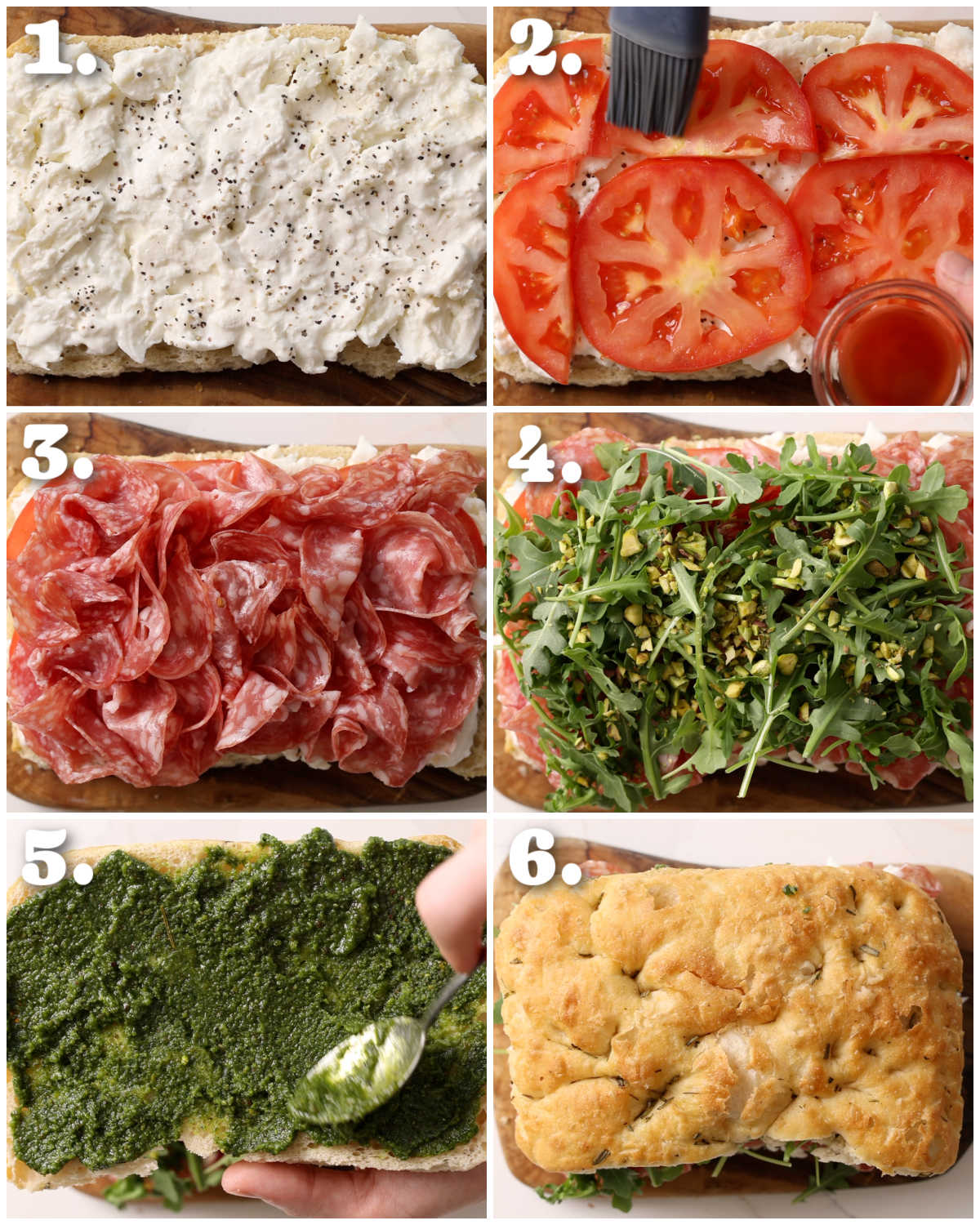
Process shots: spread burrata and season with salt and pepper (photo 1), add tomato then season and brush with vinegar (photo 2), add salami (photo 3), add arugula and pistachios (photo 4), spread pesto on top later (photo 5), close sandwich (photo 6).
Make ahead
It’s definitely best fresh, but if you want to make this sandwich ahead of time, I would season and brush the tomatoes and tightly store them outside the sandwich. Then add them in just before serving. It’s not a huge issue if you don’t, but you risk them becoming watery as they rest in the sandwich. I also like the sandwich at room temp, but that’s personal preference.
How to serve a Focaccia Sandwich
Honestly, these things are huge. One sandwich and Iâm usually sorted for lunch. If you do want something on the side, Iâd keep it simple with a lightly dressed salad, some olives or a handful of crisps and call it a day.
For another Italian-inspired sandwich, check out my Chicken Pesto Grilled Cheese!
Alrighty, let’s tuck into the full recipe for this focaccia sandwich shall we?!
How to make a Focaccia Sandwich (Full Recipe & Video)
-
Sharp Knife & Chopping Board
-
Food Processor (for pesto)
-
Paper Towels (for tomatoes)
-
Brush (for vinegar)
Pistachio Pesto (sub regular store-bought – see notes)
Prevent your screen from going dark
-
For the pesto, add everything to a food processor and blitz until smooth. Check for seasoning and adjust if needed, then place to one side. You may need to stop and scrape the sides once or twice.
-
Carefully slice the focaccia through the centre to make two even halves. Open the burrata and distribute it across the base slice as evenly as you can, then season with a good pinch of salt and pepper.
-
Pat the sliced tomato with paper towels to remove excess moisture, then lay it across the burrata. Lightly brush with vinegar, then season with a good pinch of salt.
-
Add the salami on top of the tomatoes. I like to fold/scrunch it to create height and texture in the sandwich. Add arugula/rocket, then sprinkle over some crushed pistachios.
-
Spread the pesto on the top slice, ensuring it’s covered evenly. Don’t feel like you need to use it all (tightly store leftovers in the fridge).
-
Plonk the top slice on top, slice into 4, then serve and enjoy!
b) Focaccia – These measurements are based on an 8×5″ loaf of Focaccia. I get a Rosemary & Sea Salt loaf from Sainsbury’s, although I believe some other supermarkets may sell something similar. If your loaf is a different size, just use your best judgement to adjust the filling quantities as needed.
c) Burrata – You’ll find this in nearly all supermarkets these days. I actually used a pot of mini burrata to film because they looked cute. Burrata is great because it’s nice and creamy, but if you don’t want to use it or can’t find it, fresh mozzarella is the next best thing. Bonus points if you can find Stracciatella (the inside of burrata).
d) Calories – whole sandwich divided by 4 assuming all of the pesto is used.Â
Calories: 583kcal | Carbohydrates: 28.67g | Protein: 24.07g | Fat: 41.93g | Saturated Fat: 12.081g | Polyunsaturated Fat: 5.162g | Monounsaturated Fat: 22.739g | Trans Fat: 0.197g | Cholesterol: 66mg | Sodium: 1345mg | Potassium: 419mg | Fiber: 2.7g | Sugar: 3.17g | Vitamin A: 1056IU | Vitamin C: 6.6mg | Calcium: 303mg | Iron: 3.38mg
PakarPBN
A Private Blog Network (PBN) is a collection of websites that are controlled by a single individual or organization and used primarily to build backlinks to a “money site” in order to influence its ranking in search engines such as Google. The core idea behind a PBN is based on the importance of backlinks in Google’s ranking algorithm. Since Google views backlinks as signals of authority and trust, some website owners attempt to artificially create these signals through a controlled network of sites.
In a typical PBN setup, the owner acquires expired or aged domains that already have existing authority, backlinks, and history. These domains are rebuilt with new content and hosted separately, often using different IP addresses, hosting providers, themes, and ownership details to make them appear unrelated. Within the content published on these sites, links are strategically placed that point to the main website the owner wants to rank higher. By doing this, the owner attempts to pass link equity (also known as “link juice”) from the PBN sites to the target website.
The purpose of a PBN is to give the impression that the target website is naturally earning links from multiple independent sources. If done effectively, this can temporarily improve keyword rankings, increase organic visibility, and drive more traffic from search results.