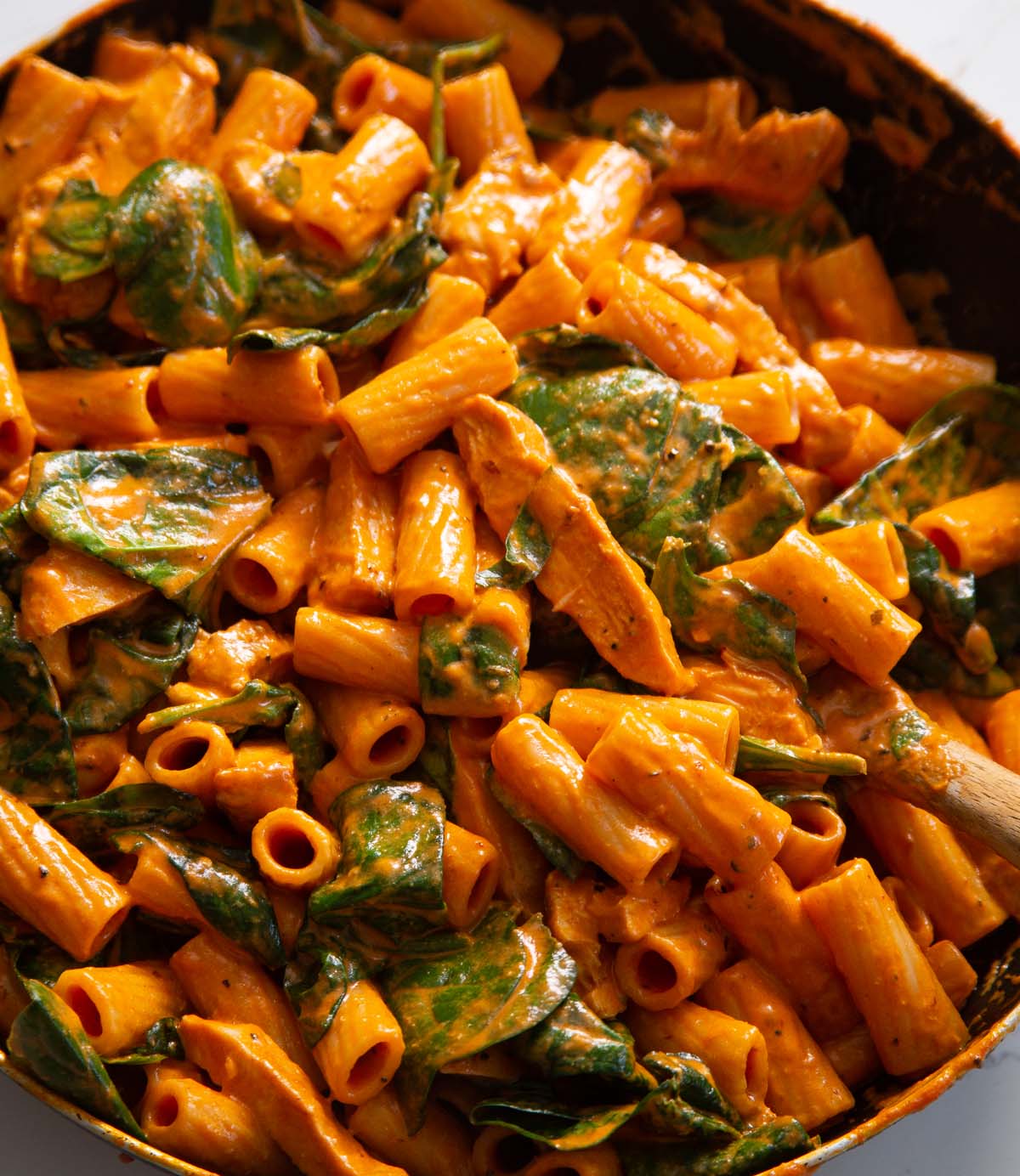
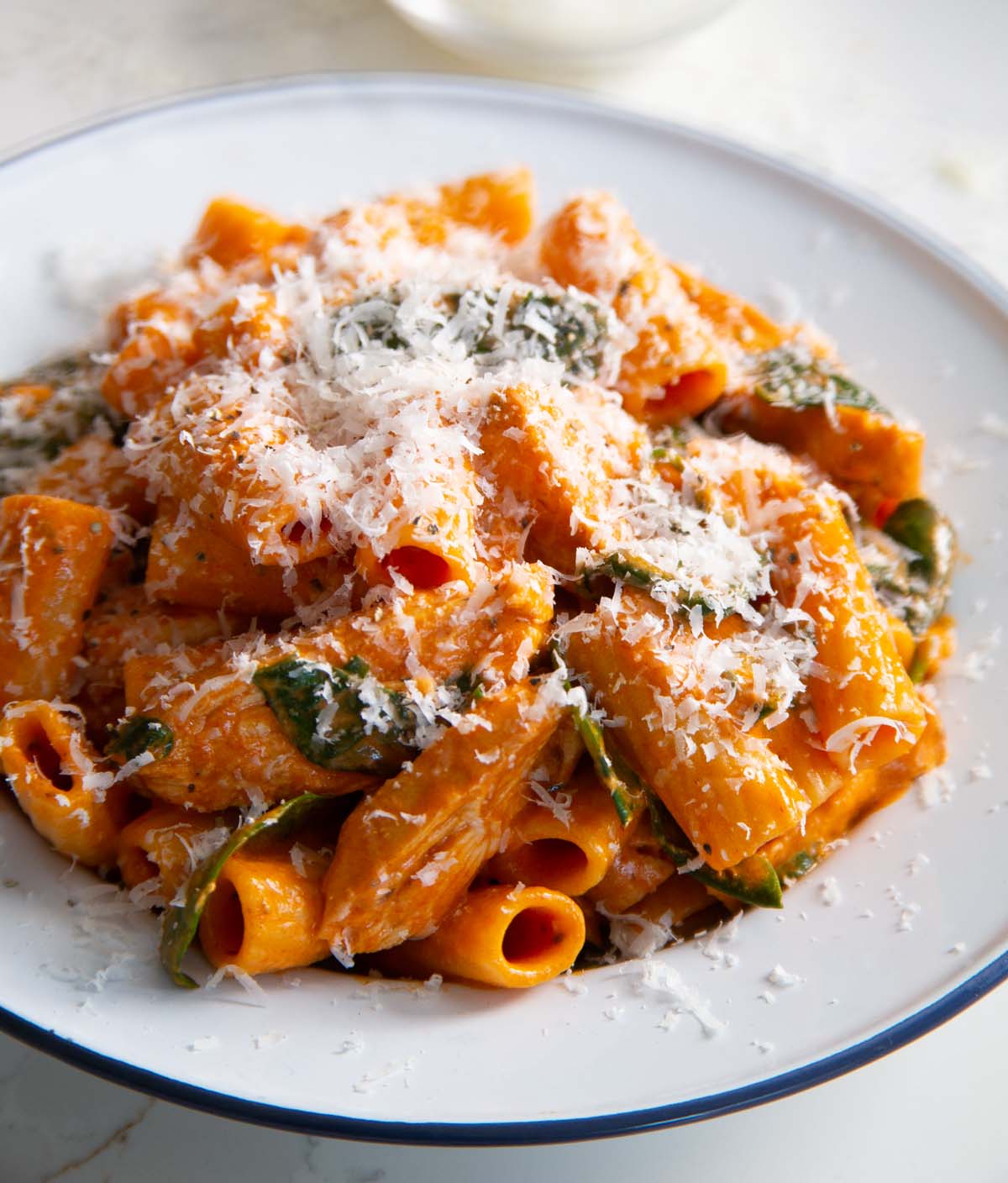
This creamy Chicken Rigatoni Fiorentina features a smoky tomato sauce, juicy chicken and tender spinach for a rich, comforting pasta dinner.
What sets this apart from the rest is a combination of flavour and convenience. This recipe uses simple, store-bought ingredients to create an incredibly hearty and delicious chicken rigatoni. Follow me…
Chicken Rigatoni
If you’ve been here for a while, you’ll know I’m a huge fan of chicken and pasta, and as chicken pasta recipes go, this one is pretty special.
For this recipe, we’ll be slicing a couple of chicken breasts right through the centre to create 4 even-sized cutlets. ‘Why’ you ask? Two reasons:
- Speed – halving the chicken breasts will allow them to cook through quicker.
- Even cooking – halving them will also allow the chicken to cook through more evenly too.
It’s also better to have thinner strips of chicken when combining with pasta, just so everything is more homogenous and the chicken blends through nicely.
Pan-fried chicken
Pan-frying the chicken is awesome when combining with pasta, because you get to use up all the flavour (aka ‘fond’) in the pan once it’s done. After you’ve seasoned the chicken, you just need a little oil and butter to fry the chicken until lightly charred and cooked through.
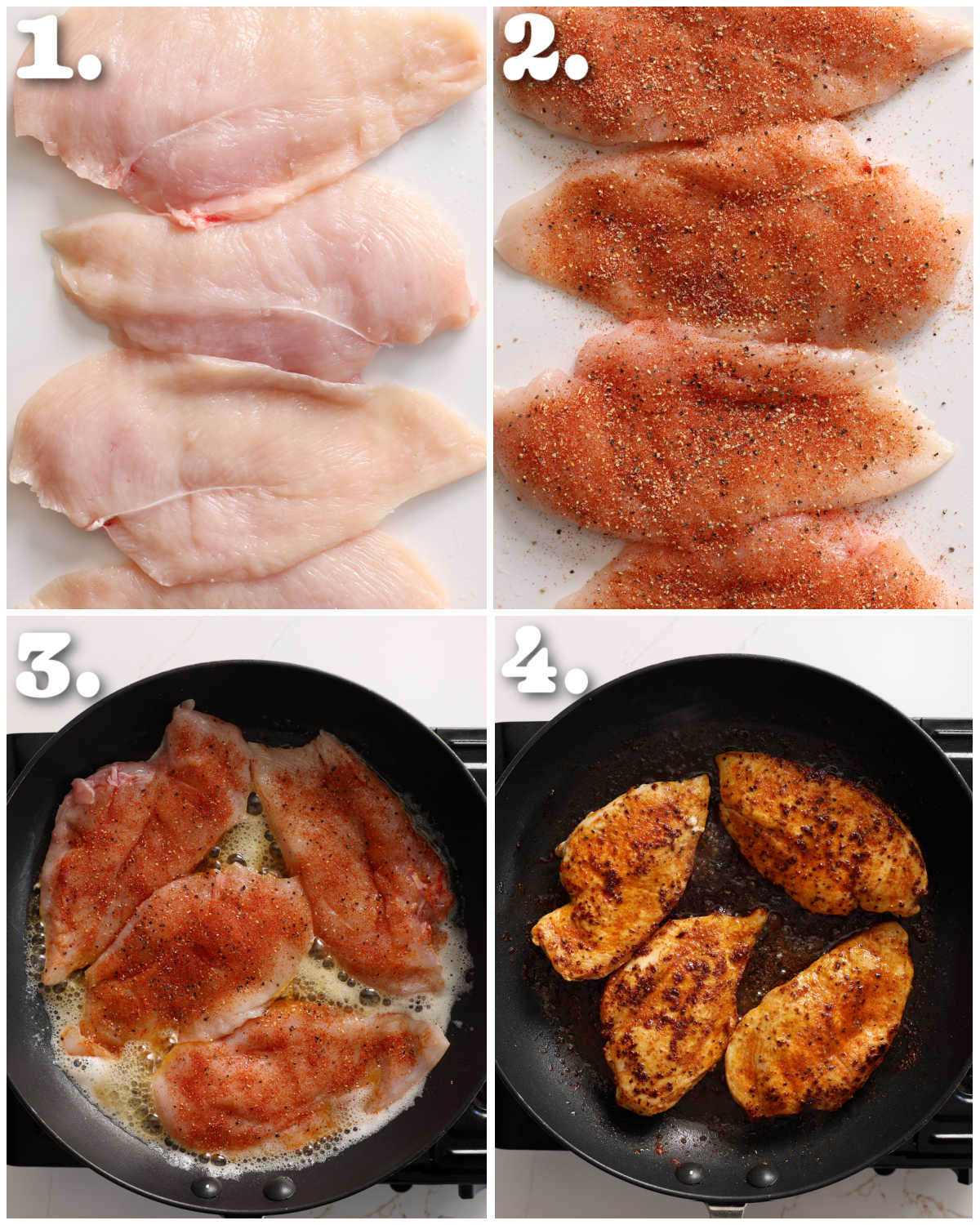
Process shots: slice chicken (photo 1), season (photo 2), add to oil and butter in pan (photo 3), fry then remove (photo 4).
Recipe Tip
Slice the chicken just before needed. This gives time for the meat to relax after being fried, which will help it retain its juices.
Rigatoni Fiorentina Sauce
Fiorentina sauce truly ticks all the boxes, at least on this blog anyway. It’s essentially a creamy tomato pasta sauce that’s packed with spinach, parmesan and loads of flavour. Just to break that down a little:
- Tomato – this comes from tomato puree (tomato paste in the US). I like to fry it for a minute or so to sweeten it and take the ‘bite’ out of it.
- Cream – double (UK) heavy (US) cream is important for the fullest flavour and for a thicker texture.
- Parmesan – make sure it’s freshly grated so it blends into the sauce with ease.
- Spinach – it’ll seem like a lot at the start, but it’ll wilt down. I toss this through right at the end so it doesn’t end up too soggy.
- Extra flavour Рgarlic is a must, saut̩ed in the leftover chicken fat. I also like to add chicken stock to help create the sauce, alongside some simple store-bought seasonings.
Deglazing with white wine
One other ingredient is white wine, which is great for deglazing the pan after frying the tomato puree. This also gives a lovely background flavour and cuts through the rich sauce. If you can’t use wine, just sub with more stock or leave it out.
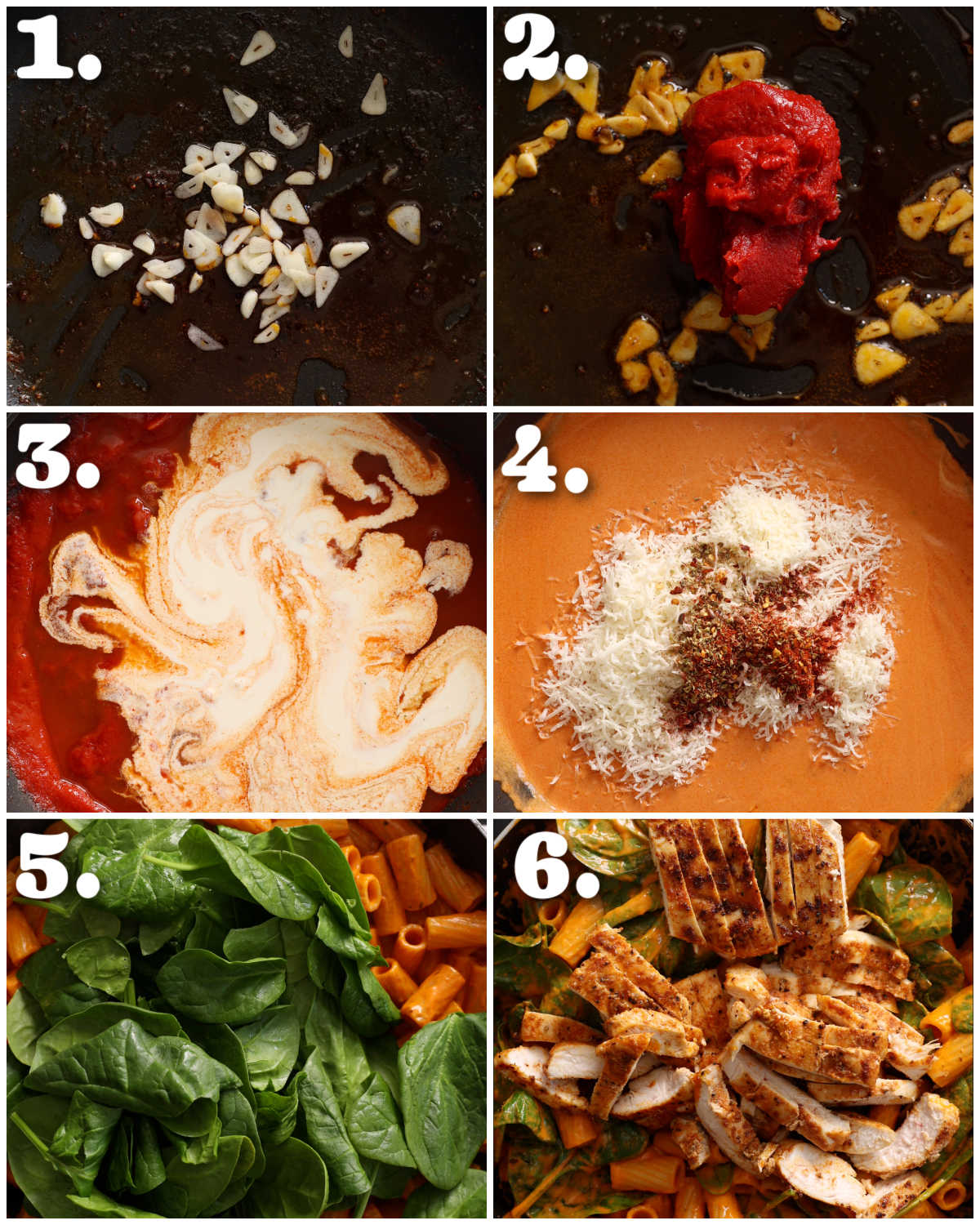
Process shots: fry garlic (photo 1), fry tomato puree (photo 2), simmer wine then add stock and cream (photo 3), add parmesan and seasoning then simmer (photo 4), stir in pasta then stir in spinach (photo 5), stir in chicken (photo 6).
How to serve Chicken Rigatoni
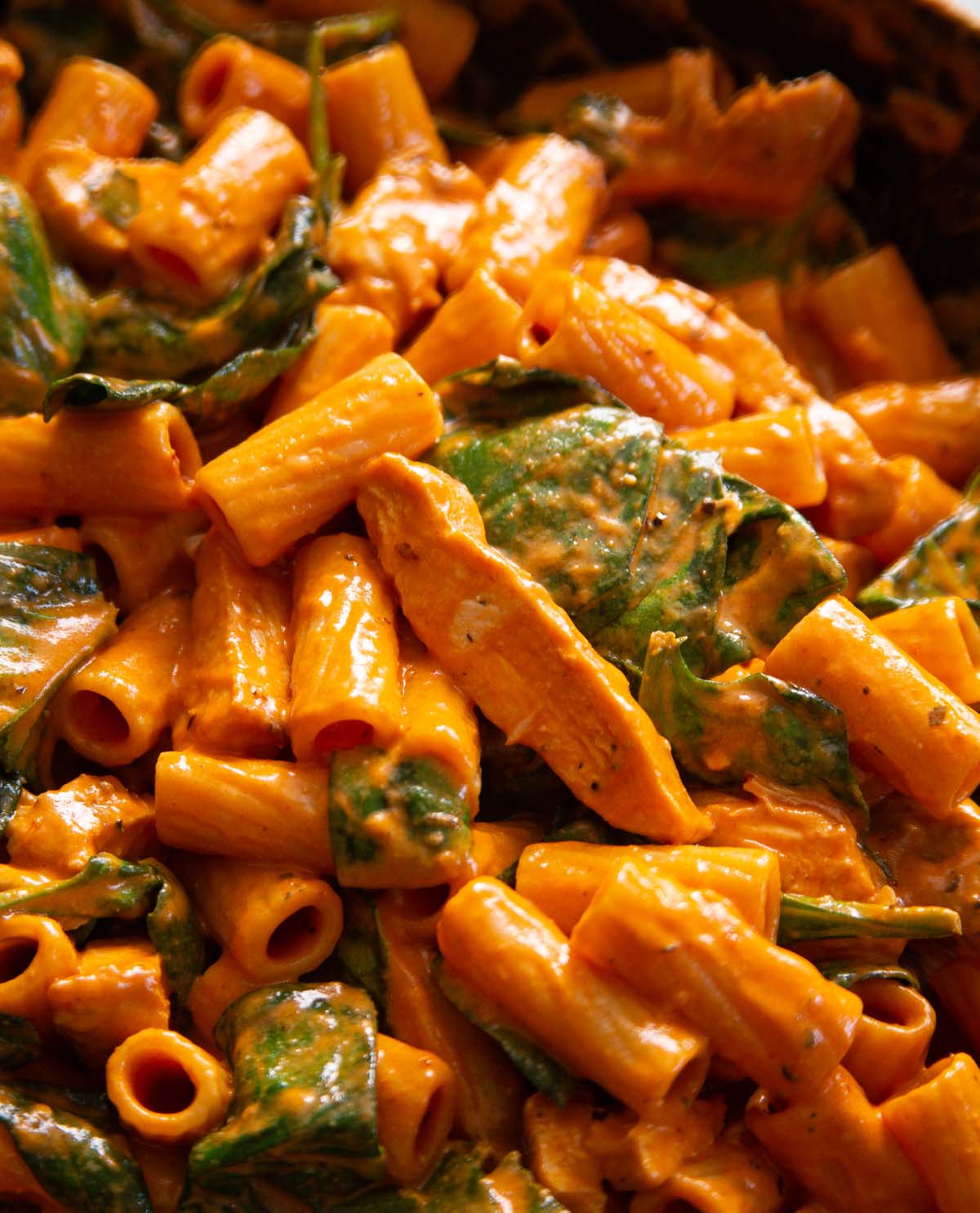
Once everything is combined, serve it up right away (the sauce will thicken up quickly). If the sauce is too thick, just toss in some excess pasta water to thin it out as needed. From there, you can pile on extra parmesan if your heart desires.
This is a pretty hearty pasta recipe, but if you want to go full comfort, then Garlic Bread is always welcome!
Leftovers will store perfectly tightly stored in the fridge for a few days. You can reheat in the microwave until piping hot again, or add to a pan with a splash of milk or stock and reheat over low until piping hot again.
Alrighty, let’s tuck into the full recipe for this chicken rigatoni shall we?!
How to make the best Chicken Rigatoni (Full Recipe & Video)
-
Sharp Knife & Chopping Board
-
Large Deep Saucepan and Tongs
-
Wooden Spoon
-
Large Pot & Colander (for pasta)
Prevent your screen from going dark
-
In a small pot or bowl, combine the chicken seasoning.
-
Use a knife to horizontally slice each breast right through the centre to create 4 even-sized cutlets. Evenly coat both sides of each cutlet with the seasoning.
-
Add the oil and butter to a large, deep saucepan over medium-high heat. Once hot, add the chicken and fry both sides for around 3 minutes, or until lightly charred with the chicken just about cooked through the centre. Remove from the pan and place on a plate to one side, leaving the excess fat in the pan. Slice the chicken into thin strips just before needed.
-
Lower the heat to medium, then add the garlic and fry for 10-20 seconds (be careful it doesn’t burn). Stir in the tomato puree and fry for a minute, then pour in the wine. Simmer for a few minutes to reduce the wine until it is almost evaporated, with the pungent smell of alcohol gone.
-
At this point, you can add the pasta to salted boiling water and cook until al dente. Drain when needed, retaining a cup of the starchy pasta water.
-
Stir the stock and cream into the saucepan, then stir in the parmesan and seasonings until everything is blended. Bring to a simmer and cook the sauce for around 5-7 minutes until it thickens. Stir in the resting juices from the chicken, then season to taste with salt and pepper.
-
Stir in the drained pasta, thinning out with a splash of leftover pasta water if needed. Stir in the spinach until it begins to wilt, then stir in the chicken until everything is coated in the sauce. Again, thin out with a splash of pasta water if needed, just make sure the sauce thickens and clings to the pasta in the end.
-
Serve with extra parmesan if desired, then tuck in and enjoy!
b) Rigatoni – the recipe is classically made with Rigatoni, but, realistically, any short-cut tubed pasta will be great.Â
c) Wine – this cuts through the rich sauce and gives that ‘restaurant-quality’ finish. It’s important to cook out the alcohol; otherwise, the sauce will end up too sour. If you can’t use wine, just leave it out.
d) Spinach – it will seem like a lot, and it might be a little tricky stirring it through the pasta at the start, but it wilts down A LOT. I like to remove any very large stems beforehand, but this is optional.
e) Calories – whole recipe divided by 4, assuming no extra parmesan.
Calories: 735kcal | Carbohydrates: 68.06g | Protein: 35.31g | Fat: 35.29g | Saturated Fat: 18.62g | Polyunsaturated Fat: 2.628g | Monounsaturated Fat: 11.285g | Trans Fat: 0.227g | Cholesterol: 159mg | Sodium: 833mg | Potassium: 822mg | Fiber: 9.6g | Sugar: 3.39g | Vitamin A: 3922IU | Vitamin C: 10.7mg | Calcium: 203mg | Iron: 2.95mg
For another delicious rigatoni recipe check out my One Pot Spicy Rigatoni!
For more similar recipes check out these recipes:
Chicken Pasta Recipes
PakarPBN
A Private Blog Network (PBN) is a collection of websites that are controlled by a single individual or organization and used primarily to build backlinks to a “money site” in order to influence its ranking in search engines such as Google. The core idea behind a PBN is based on the importance of backlinks in Google’s ranking algorithm. Since Google views backlinks as signals of authority and trust, some website owners attempt to artificially create these signals through a controlled network of sites.
In a typical PBN setup, the owner acquires expired or aged domains that already have existing authority, backlinks, and history. These domains are rebuilt with new content and hosted separately, often using different IP addresses, hosting providers, themes, and ownership details to make them appear unrelated. Within the content published on these sites, links are strategically placed that point to the main website the owner wants to rank higher. By doing this, the owner attempts to pass link equity (also known as “link juice”) from the PBN sites to the target website.
The purpose of a PBN is to give the impression that the target website is naturally earning links from multiple independent sources. If done effectively, this can temporarily improve keyword rankings, increase organic visibility, and drive more traffic from search results.