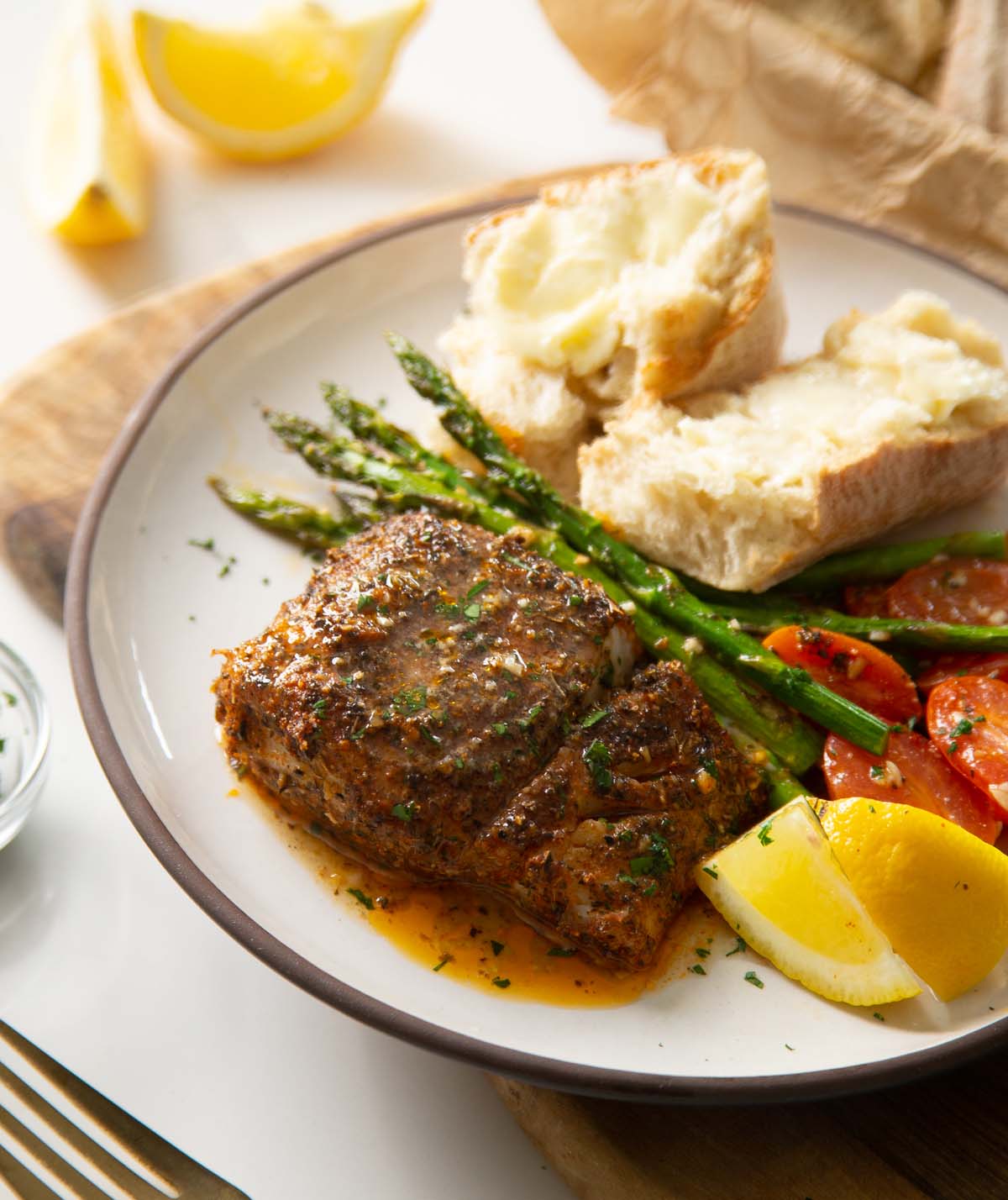
This baked Cajun cod is flaky, flavour-packed and unbelievably easy. A quick one-pan dinner thatâs perfect for busy weeknights.
Another awesome thing about this cod is that it’s ‘self-saucing’. The tray collects all the gorgeous flavours from the tomatoes and cod to create a glossy sauce to drizzle over at the end. Sounds good? Follow me…
Cajun Cod
I know cod and Cajun might seem like a slight mismatch, but it’s a combination that truly works. Cod actually takes on spice really nicely (think blackened cod or cod in a spicy tomato sauce).
For this recipe, we’ll be using boneless skinless cod fillets. Because we’re baking the fillets, you don’t really get the opportunity to crisp up the skin to the same extent as if it were fried. Hence why I recommend skinless fillets.
Preparing the cod
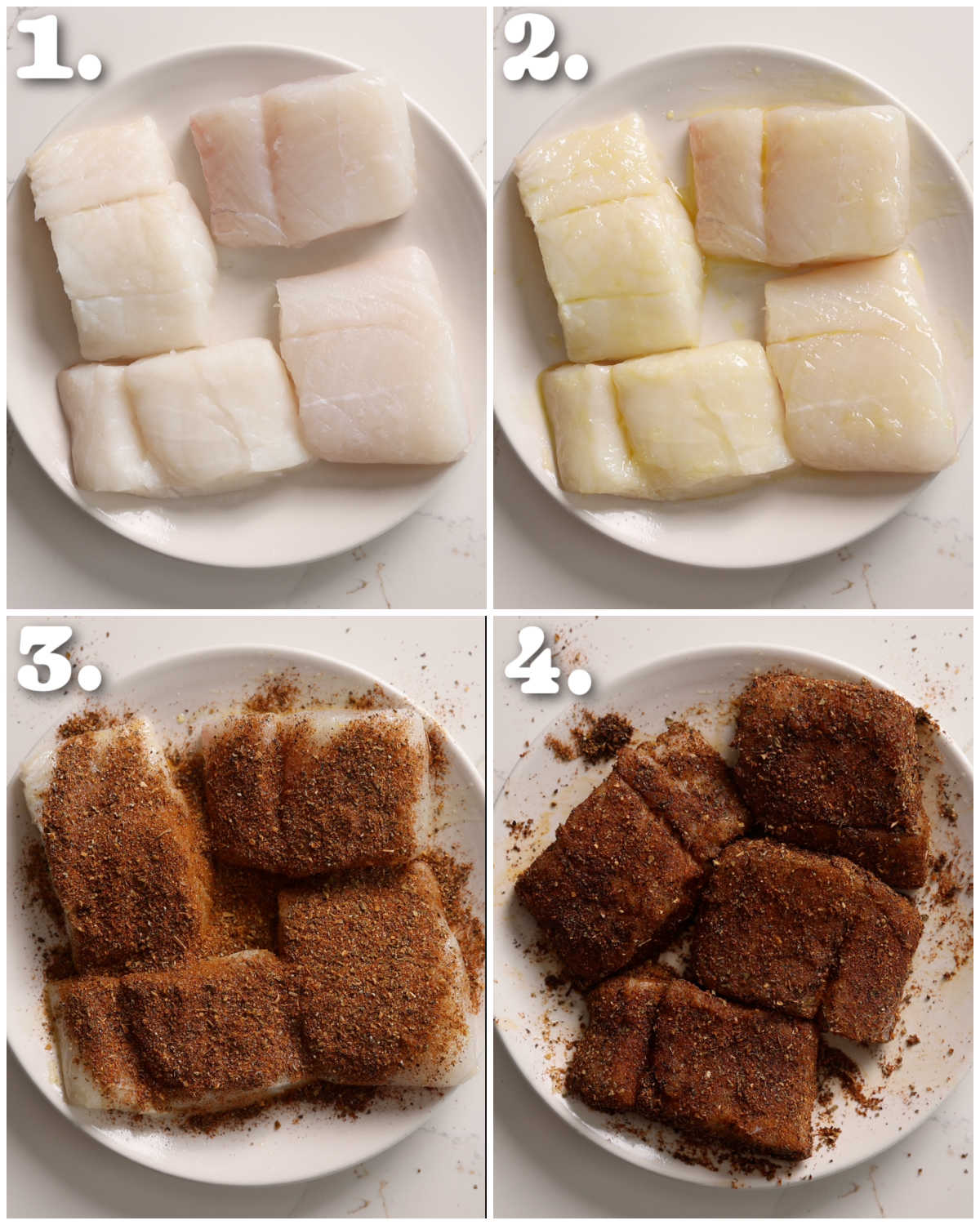
I like to pat the cod dry and lightly brush it with oil before coating it with seasoning. Patting it dry will remove the excess moisture to prevent the cod from steaming in the oven. The oil helps keep the cod moist, whilst also helping the seasoning attach and lightly crisp in the oven.
Process shots: pat cod dry (photo 1), brush with oil (photo 2), sprinkle over seasoning (photo 3), gently rub into cod (photo 4).
Cod Traybake
Since we’ll be baking the cod, it would be rude not to add a few other goodies alongside:
- Tomatoes – sliced baby plum or cherry tomatoes work perfectly here; they release their juices on the tray and create the most delicious pan sauce to drizzle over the cod.
- Asparagus – this takes on all the flavours of the traybake so deliciously.
- Garlic – pairs perfectly with the veg, cod and Cajun seasoning.
Cajun butter cod
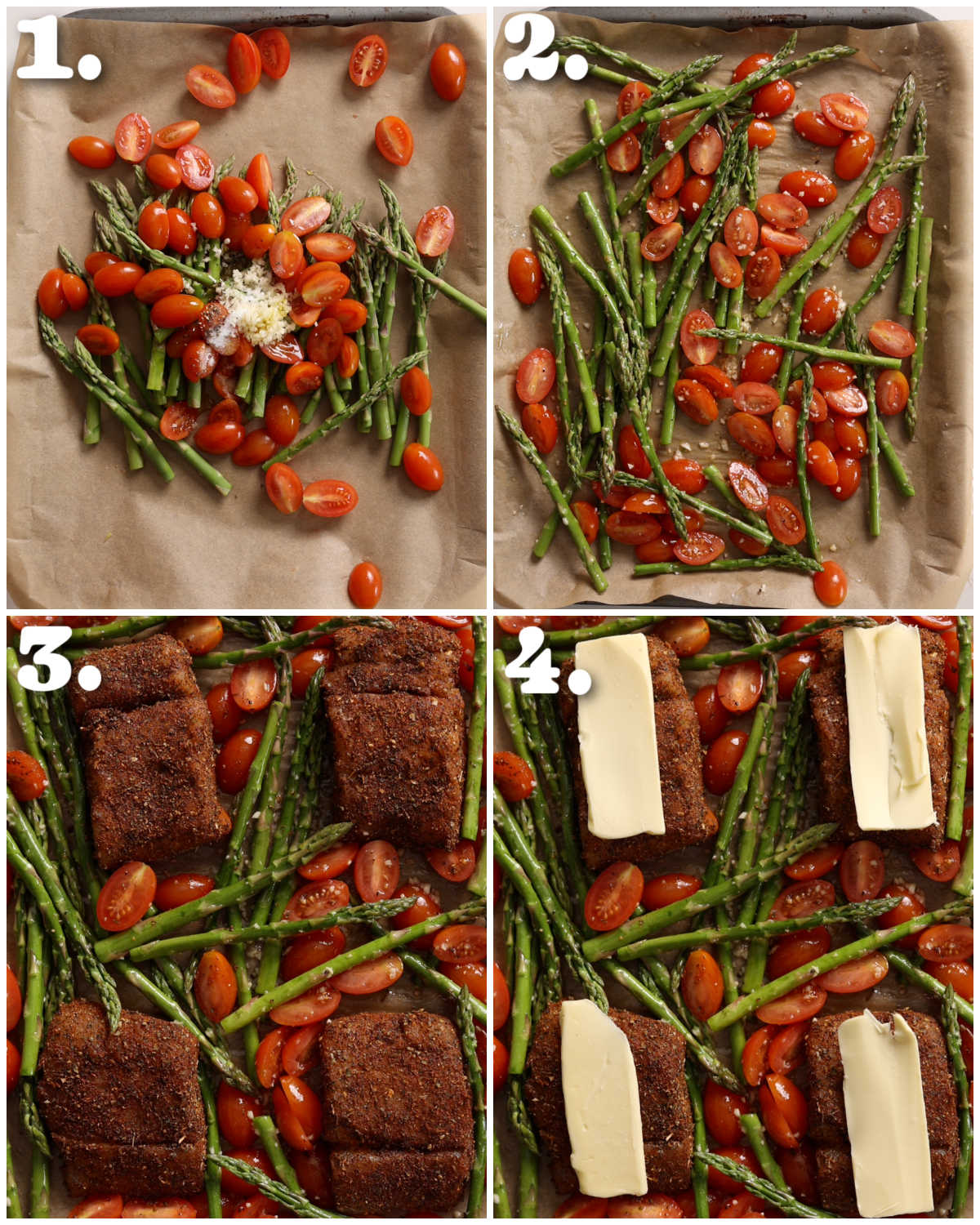
I like adding a very thin slab of butter on top of the cod before it goes into the oven. It melts into the cod and not only keeps it moist, but also wraps it in a lovely, rich flavour. Plus, Cajun seasoning and butter are a match made in heaven. This trick also adds to the ‘self-saucing’ I was talking about earlier, where it blends with the tomato juices to make the most incredible pan sauce.
Process shots: add tomatoes, asparagus, garlic, salt and pepper to baking tray (photo 1), toss (photo 2), nestle in cod (photo 3), add butter and bake (photo 4).
Cajun Cod FAQ
It should be opaque right through the centre with the flesh nice and flaky (you can use a fork to check). If you’re at all unsure, I recommend pulling it out early, as you can always put it back in if needed.
It’ll depend slightly on the brand of Cajun seasoning you buy, but in general, it shouldn’t be too spicy at all. Just a nice bit of heat.
Everything should finish at exactly the same time if you’re using fine asparagus. If you like the asparagus a little softer, you can add it (and the tomatoes) back in the oven for another couple of minutes without the cod.
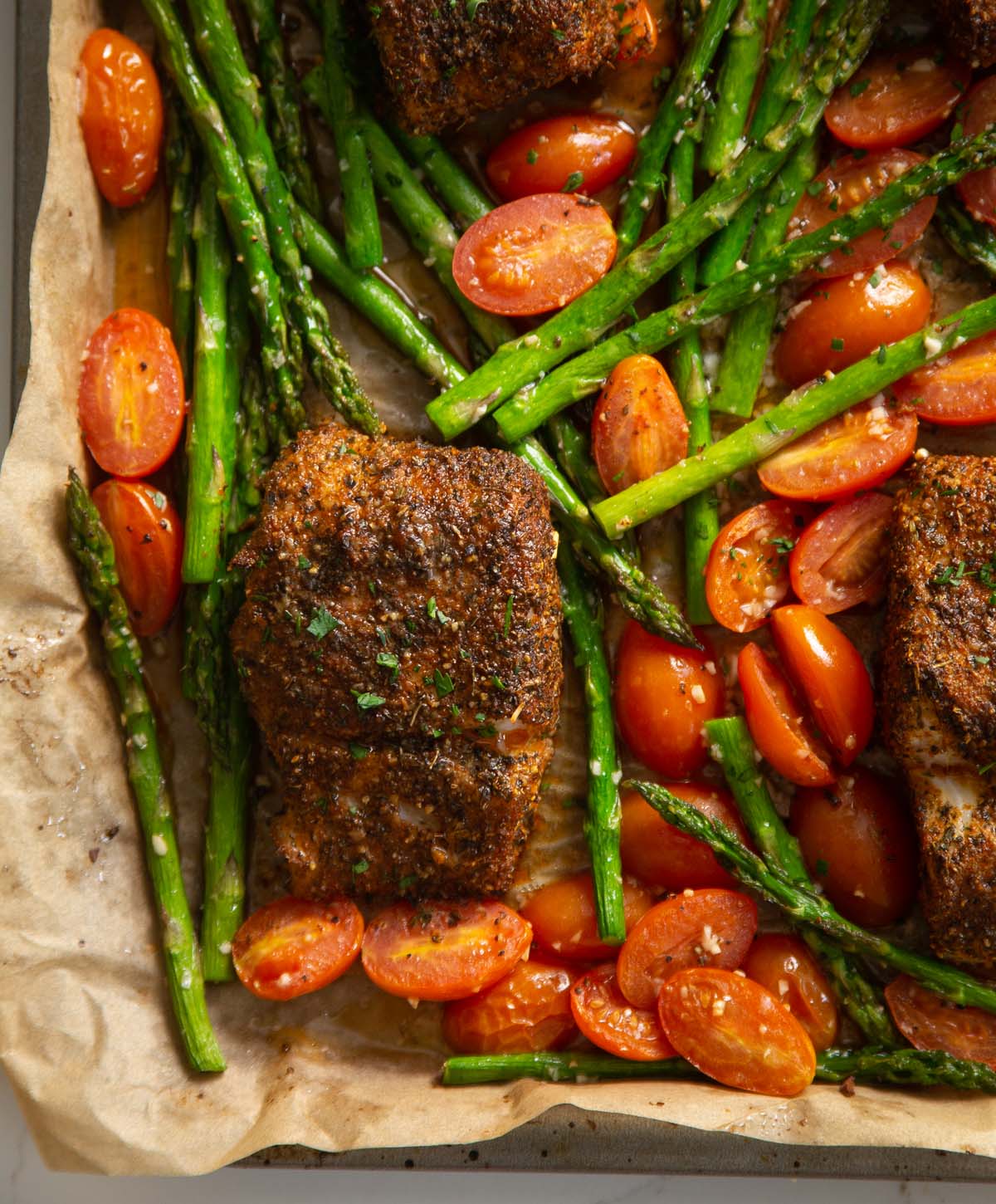
How to serve Cajun Cod
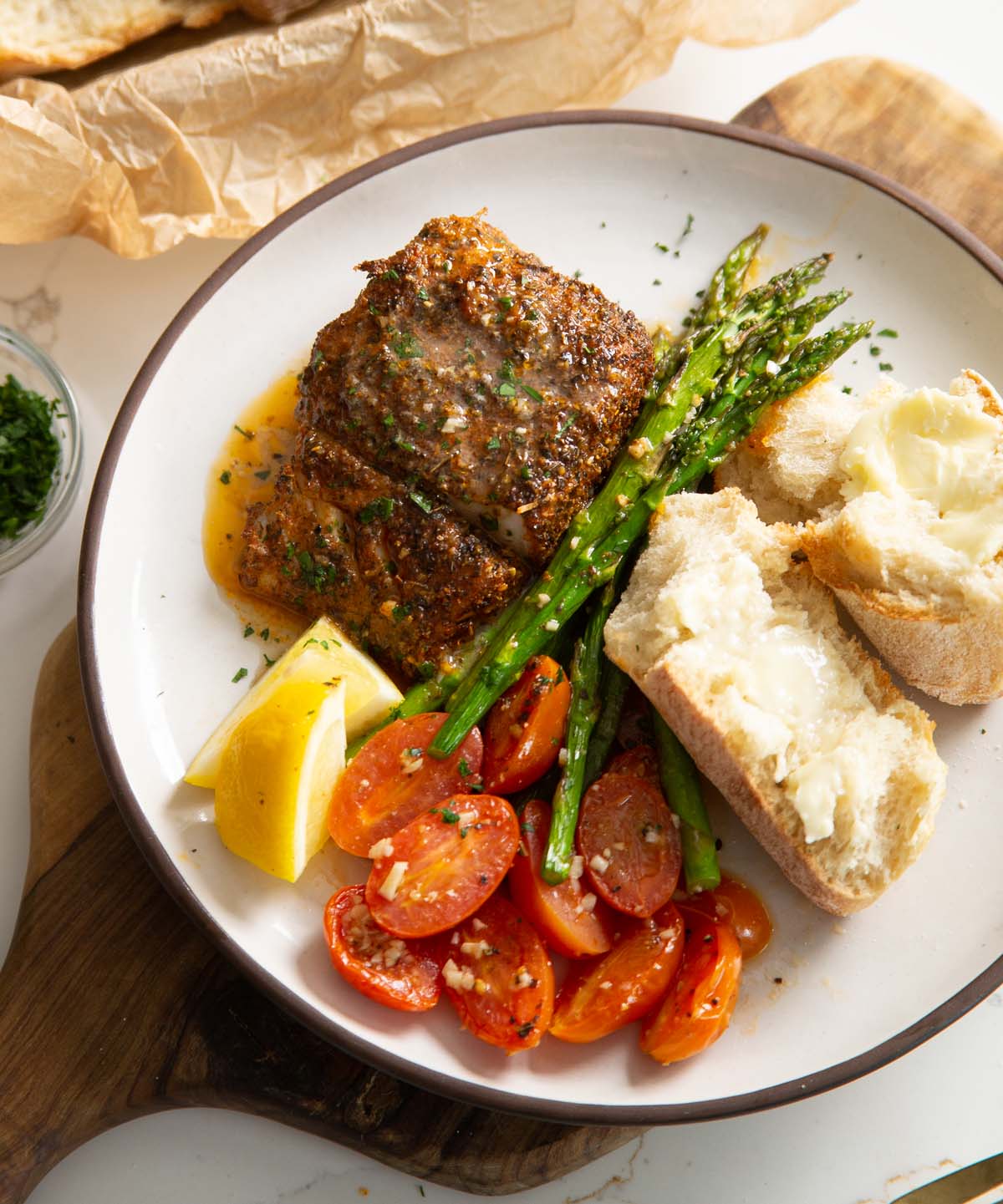
Once everything is cooked, make sure you spoon over all those gorgeous juices in the tray. From there, I recommend a few serving suggestions:
- Lemon – don’t skip this; it brightens up the cod and cuts through the rich, salty, spicy flavours.
- Parsley – I love a good sprinkling of fresh parsley over everything at the end. This is optional.
- Carb – I love some crusty bread (easiest and most delicious option). Rice would also work nicely, or even some form of potato.
Alrighty, let’s tuck into the full recipe for the Cajun cod shall we?!
How to make Cajun Cod (Full Recipe & Video)
-
Sharp Knife & Chopping Board
-
Paper Towels/Kitchen Roll (for drying cod)
-
Small Pot & Brush (for brushing cod with oil)
-
Large Baking Tray (mine is ~30×40″)
-
Baking/Parchment Paper
Prevent your screen from going dark
-
Preheat the oven to 200C/400F.
-
Line a large baking tray with baking/parchment paper. Add the tomatoes, asparagus, garlic, salt and pepper and toss until everything is combined.
-
Use kitchen roll/paper towels to dry the cod fillets, then place them on a plate. Brush with extra virgin olive oil, then sprinkle over the Cajun seasoning, salt and pepper. Dab the sides in the excess seasoning on the plate (I tend to leave the bottom).
-
Nestle the cod fillets into the tray, then top with the butter. Bake in the oven for around 10-12 minutes, or until the cod easily flakes and is opaque through the centre.
-
Serve the cod with the asparagus, tomatoes and a lemon wedge each, then garnish with fresh parsley. Drizzle over the pan juices, then squeeze the lemon over the cod (work to taste). Enjoy!
b) Cajun Seasoning – Just use your favourite store-bought. If your cod fillets are small, there will likely be leftover seasoning, so don’t force it all on (just enough to coat the cod). I like to add extra salt and pepper, but if you’re at all wary, or the seasoning is already quite salty, you can reduce or omit (you can always sprinkle over more salt at the end if needed).
c) Butter – Because of the seasoning, the butter doesn’t really spread much as it melts. As such, I like to lay very long, thin slabs on the cod to cover as much surface as possible.
d) Fine Asparagus – It’s important you use fine asparagus tips, otherwise they’ll still be firm after the cod has cooked. I like my asparagus a little al dente, but if you like it very soft, just put it back in the oven after the cod has cooked for a few more minutes (the tomatoes will hold up just fine).
e) Calories – Whole recipe divided by 4.
Â
Calories: 263kcal | Carbohydrates: 7.53g | Protein: 24.96g | Fat: 14.53g | Saturated Fat: 6.342g | Polyunsaturated Fat: 1.187g | Monounsaturated Fat: 6.073g | Trans Fat: 0.359g | Cholesterol: 93mg | Sodium: 1059mg | Potassium: 657mg | Fiber: 2.5g | Sugar: 3.07g | Vitamin A: 1335IU | Vitamin C: 11.8mg | Calcium: 37mg | Iron: 1.87mg

For more similar recipes check out these beauties:
Delicious Cod Recipes
PakarPBN
A Private Blog Network (PBN) is a collection of websites that are controlled by a single individual or organization and used primarily to build backlinks to a “money site” in order to influence its ranking in search engines such as Google. The core idea behind a PBN is based on the importance of backlinks in Google’s ranking algorithm. Since Google views backlinks as signals of authority and trust, some website owners attempt to artificially create these signals through a controlled network of sites.
In a typical PBN setup, the owner acquires expired or aged domains that already have existing authority, backlinks, and history. These domains are rebuilt with new content and hosted separately, often using different IP addresses, hosting providers, themes, and ownership details to make them appear unrelated. Within the content published on these sites, links are strategically placed that point to the main website the owner wants to rank higher. By doing this, the owner attempts to pass link equity (also known as “link juice”) from the PBN sites to the target website.
The purpose of a PBN is to give the impression that the target website is naturally earning links from multiple independent sources. If done effectively, this can temporarily improve keyword rankings, increase organic visibility, and drive more traffic from search results.