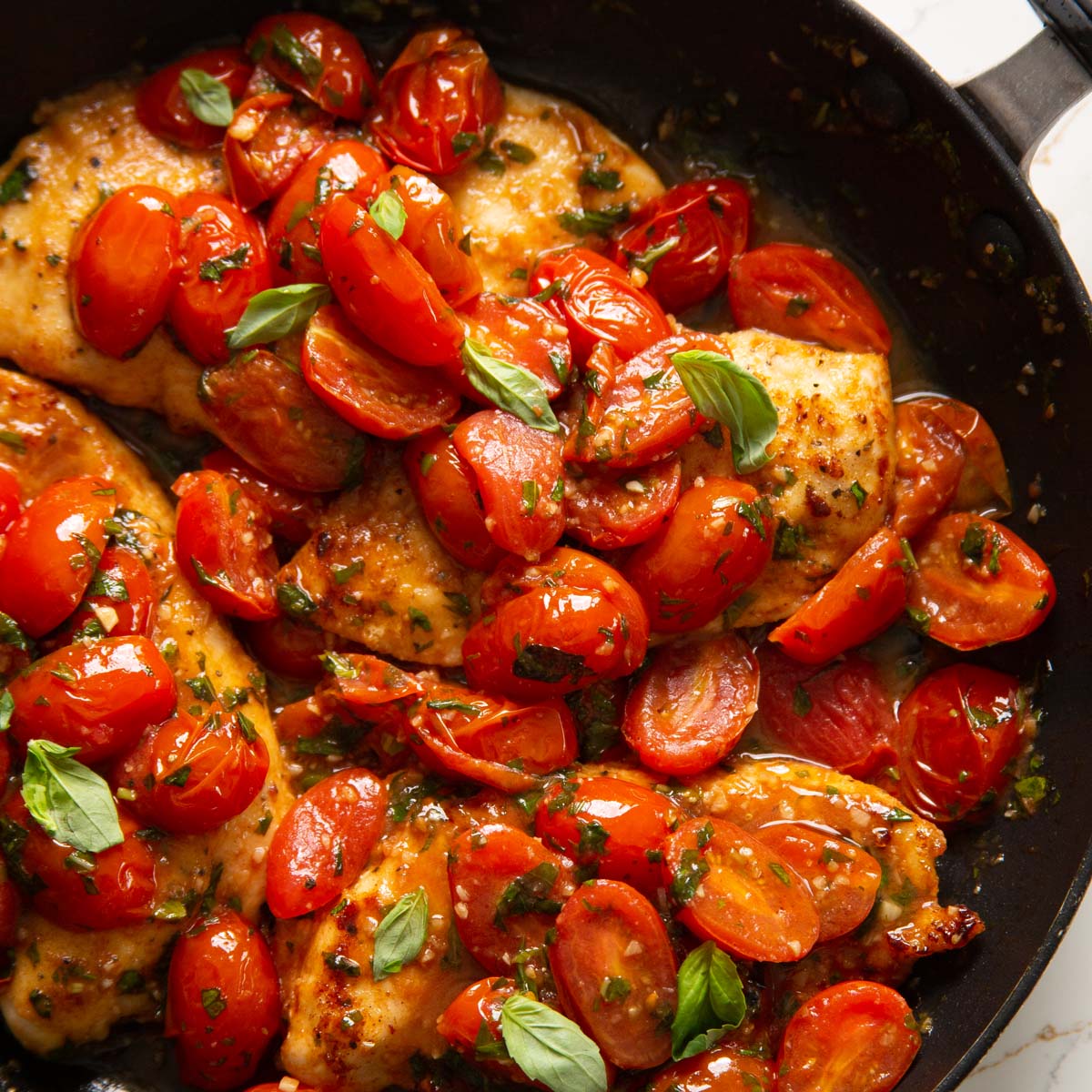
Juicy chicken breast snuggled in a buttery, garlic, tomato and basil sauce. The best part? It takes just 30 minutes to make!
If you’re looking for a new easy and delicious one-pan meal to add to your dinner rotations, then you’re in the right place. Follow me…
Ingredient Notes
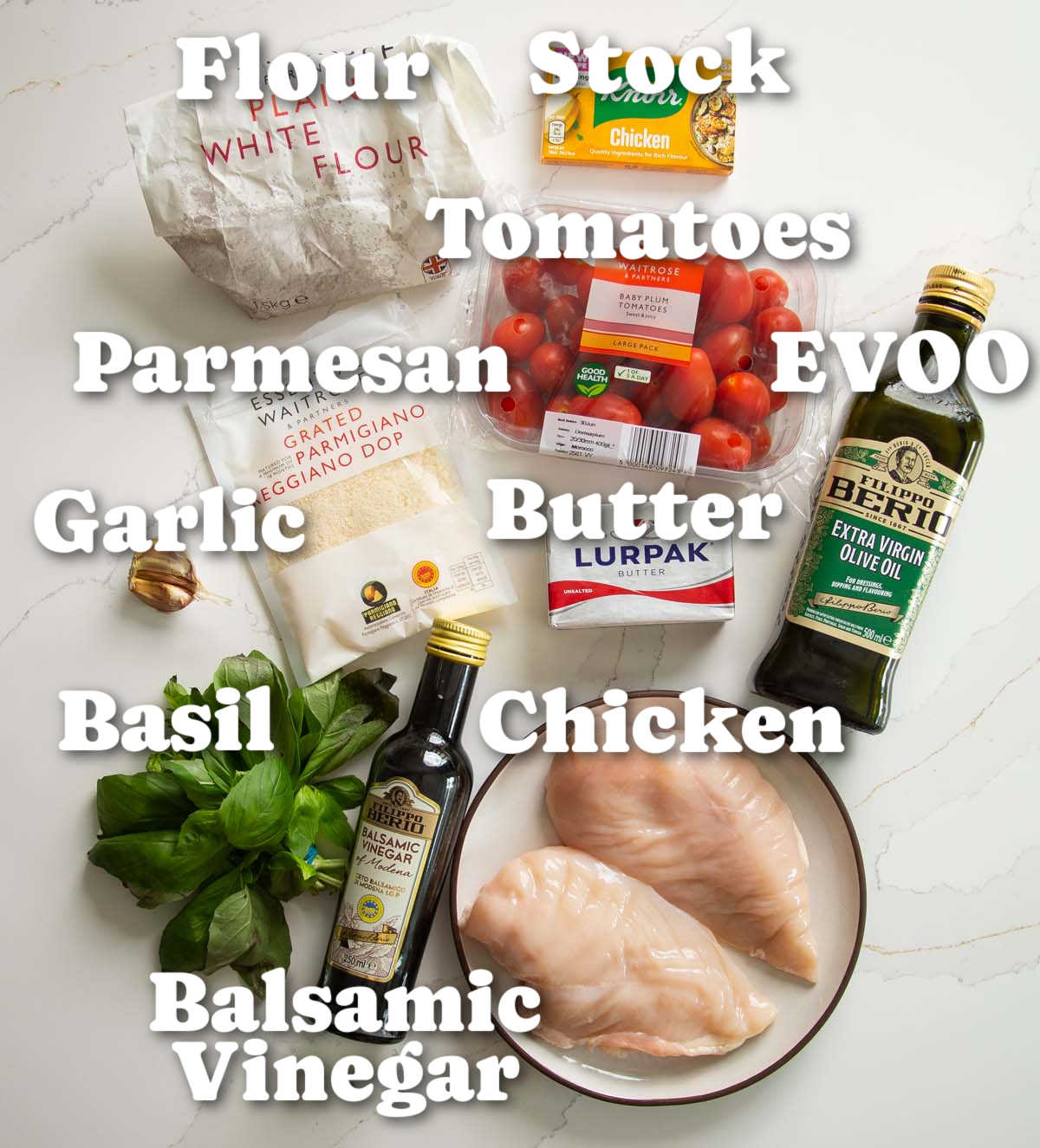
What’s awesome about this recipe is that you only need a handful of simple ingredients, many of which I’m confident you’ll already have on hand. The full quantities are down in the recipe card, but let me just quickly go over what we’ll be using:
- Chicken & breading – we’ll be using chicken breasts and coating them in a simple concoction of parmesan and flour. This will create a gorgeous golden and flavoursome coating. The chicken will be fried in extra virgin olive oil and butter.
- Tomatoes & basil – these are the stars of the show, so make sure both are as fresh as possible. I like using baby plum tomatoes (grape tomatoes) because they’re sweet and hold up their structure nicely
- The sauce – a good amount of butter and the juices from the tomatoes make for a luscious sauce as it is, but I like to add some stock to help bring everything together and deepen the flavour.
- Extra flavour – a good helping of fresh garlic is a must. I also love a splash of balsamic vinegar; it helps cut through the richness of the sauce and really wakes everything up. It, of course, also pairs delightfully with the tomatoes too.
Chicken Cutlets
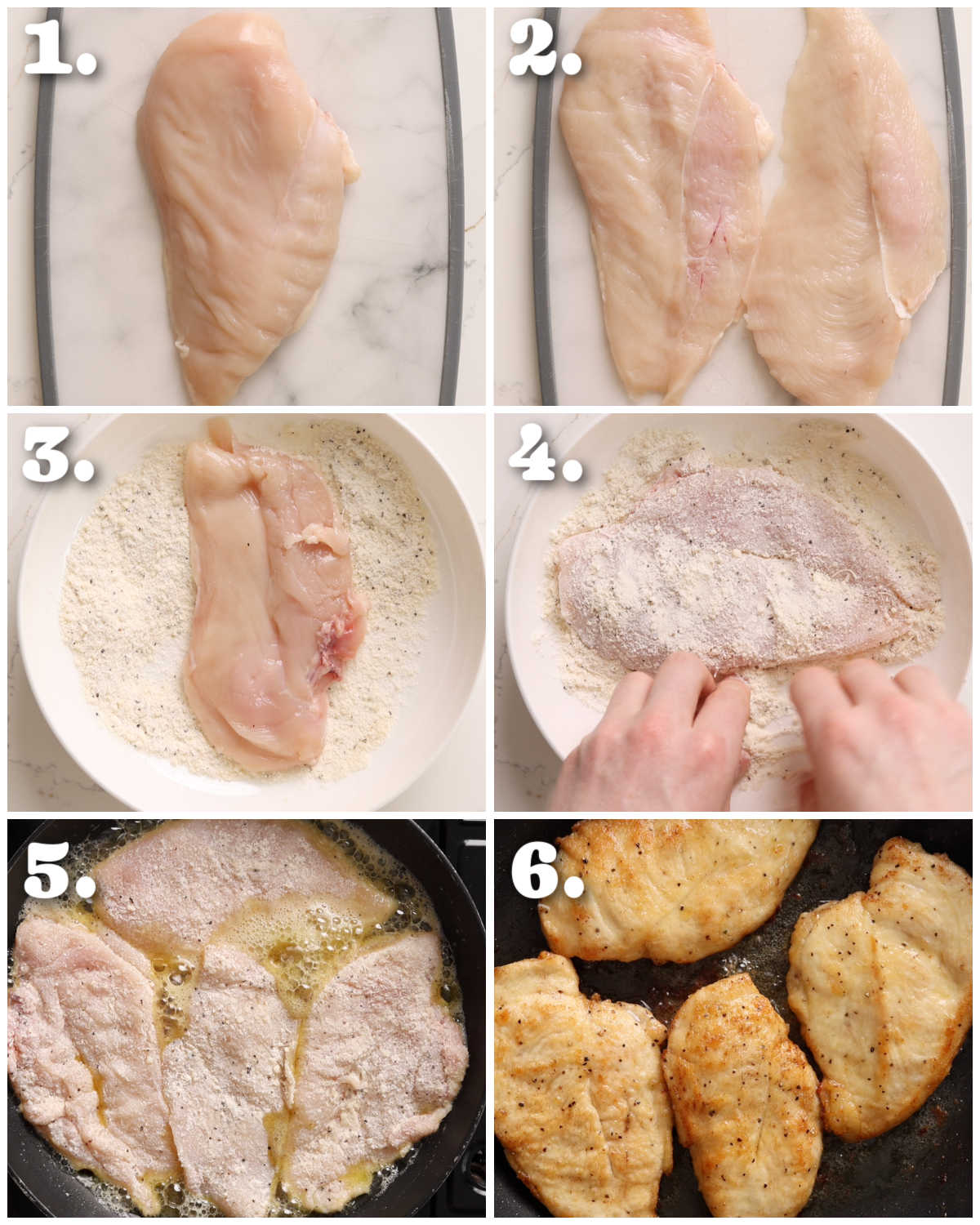
For this recipe, we’ll be using a couple of chicken breasts and halving them right through the centre to create 4 even-sized cutlets. This will not only double the portion size, but it’ll also ensure the chicken cooks through quicker and more evenly. From there, you’ll prep and cook them:
- Breading the chicken – once you’ve sliced the chicken, you’ll want to coat it in flour and parmesan. Both will help give the chicken a nice golden crust. Further, the parmesan helps add a boost of flavour, whilst the flour will help the sauce cling to the chicken.
- Cooking the chicken – I like to fry the chicken in a combination of oil and butter. The butter wraps the chicken in a rich flavour, whilst the oil helps prevent it from burning.
Process shots: slice chicken (photos 1&2), coat in flour/parmesan (photos 3&4), fry (photos 5&6).
Tomato Basil Sauce for Chicken
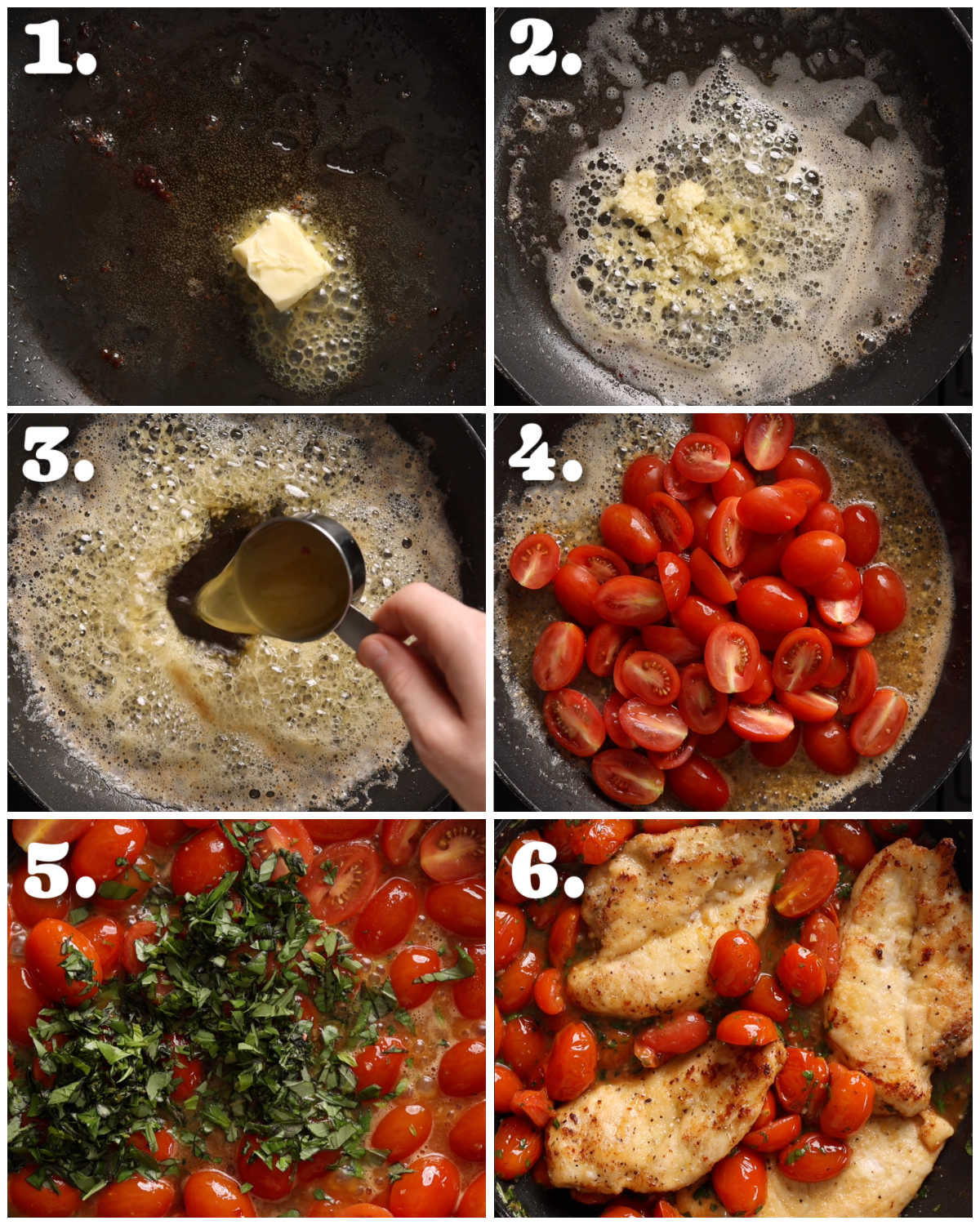
The sauce comes together in a matter of minutes, so you’ll want to have everything prepped and ready to go. The end result should be a light, glossy sauce that’s thick enough to cling to the chicken. You want the tomatoes soft, so they release some of their juices, but don’t go overboard to the point they turn to mush.
Process shots: melt butter (photo 1), fry garlic (photo 2), add stock (photo 3), simmer tomatoes (photo 4), add basil and balsamic vinegar (photo 5), add chicken (photo 6).
Serving Suggestions
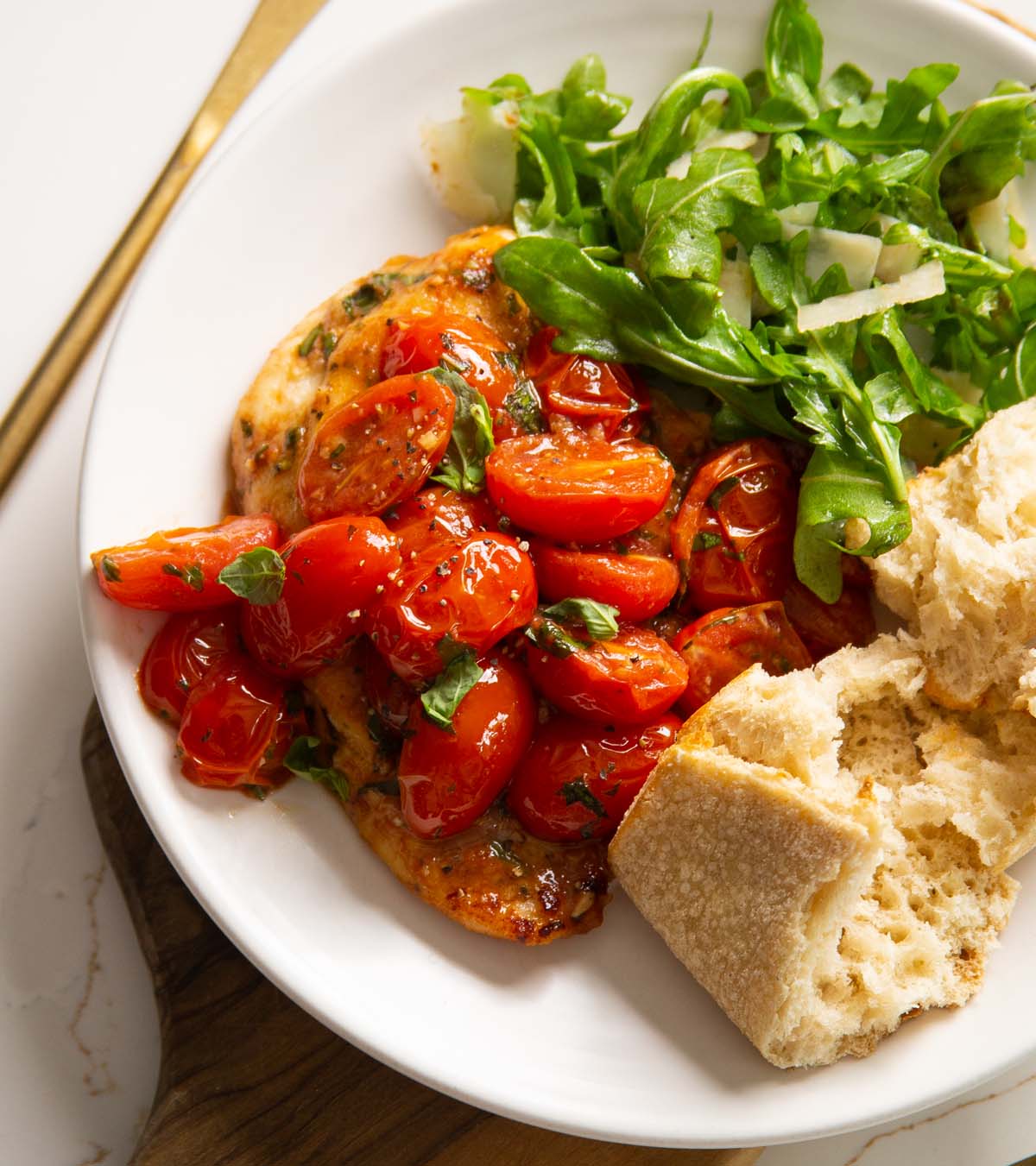
I like to add the chicken back to the pan, just so it can soak in some of the sauce. From there, serve up with extra basil, and you’re good to go! For side ideas, here’s what I recommend:
For more similar recipes check out my Tomato Basil Baked Chicken and Rice, Crispy Caprese Chicken and Creamy Tomato Chicken!
Alrighty, let’s tuck into the full recipe for this tomato basil chicken shall we?!
How to make Tomato Basil Chicken (Full Recipe & Video)
Prevent your screen from going dark
-
Horizontally slice both chicken breasts right through the centre to create 4 even-sized cutlets. Finely dice around 3/4 of the basil, saving a handful of smaller leaves to serve.
-
In a large shallow dish, combine the flour, parmesan, salt and pepper. One by one, coat the cutlets in the flour mixture, give them a light shake, then place to one side.
-
In a large pan over medium-high heat, add 1 tbsp butter and oil. Once the butter has melted and the pan is hot, add the cutlets and fry both sides for a few minutes until golden and cooked through the centre, then place on a plate to one side.
-
Lower the pan heat to medium, then melt in the remaining 2 tbsp of butter. Add the garlic and fry for 30 seconds or so (be careful it doesn’t burn), then pour in the stock. Stir in the tomatoes alongside a pinch of salt, and simmer for around 2 minutes until you notice the tomatoes just starting to soften. Stir in the balsamic vinegar and diced basil and simmer for a further minute or so, giving everything a good stir until the sauce binds and thickens a little.
-
Stir in the resting juices from the chicken, then check for seasoning and adjust with salt and black pepper. Add the chicken and baste in the tomatoes until fully coated in the sauce (it will now thicken a little more due to the floured coating on the chicken).
-
Serve with extra basil and enjoy!
b) Parmesan – just 2 tbsp will help create a golden crust and add loads of flavour to the chicken. I highly recommend using the fresh dusty variety you get in packets in the refrigerated section; it will blend with the flour and distribute across the chicken more easily. If not, just freshly grate a block nice and finely.
c) Sauce consistency – it’ll be watery at the start, but as the stock reduces and the tomatoes release their juices, you’ll end up with a glossy, buttery sauce. Just make sure you give it a good stir to emulsify the fats in the sauce. If, for whatever reason, it gets too thick, you can thin it out with a splash more stock.
d) Calories – whole recipe divided 4.
Calories: 291kcal | Carbohydrates: 8.75g | Protein: 30.69g | Fat: 14.44g | Saturated Fat: 6.803g | Polyunsaturated Fat: 1.17g | Monounsaturated Fat: 4.43g | Trans Fat: 0.38g | Cholesterol: 118mg | Sodium: 487mg | Potassium: 702mg | Fiber: 1.5g | Sugar: 3.15g | Vitamin A: 1475IU | Vitamin C: 15.5mg | Calcium: 58mg | Iron: 1.21mg
PakarPBN
A Private Blog Network (PBN) is a collection of websites that are controlled by a single individual or organization and used primarily to build backlinks to a “money site” in order to influence its ranking in search engines such as Google. The core idea behind a PBN is based on the importance of backlinks in Google’s ranking algorithm. Since Google views backlinks as signals of authority and trust, some website owners attempt to artificially create these signals through a controlled network of sites.
In a typical PBN setup, the owner acquires expired or aged domains that already have existing authority, backlinks, and history. These domains are rebuilt with new content and hosted separately, often using different IP addresses, hosting providers, themes, and ownership details to make them appear unrelated. Within the content published on these sites, links are strategically placed that point to the main website the owner wants to rank higher. By doing this, the owner attempts to pass link equity (also known as “link juice”) from the PBN sites to the target website.
The purpose of a PBN is to give the impression that the target website is naturally earning links from multiple independent sources. If done effectively, this can temporarily improve keyword rankings, increase organic visibility, and drive more traffic from search results.