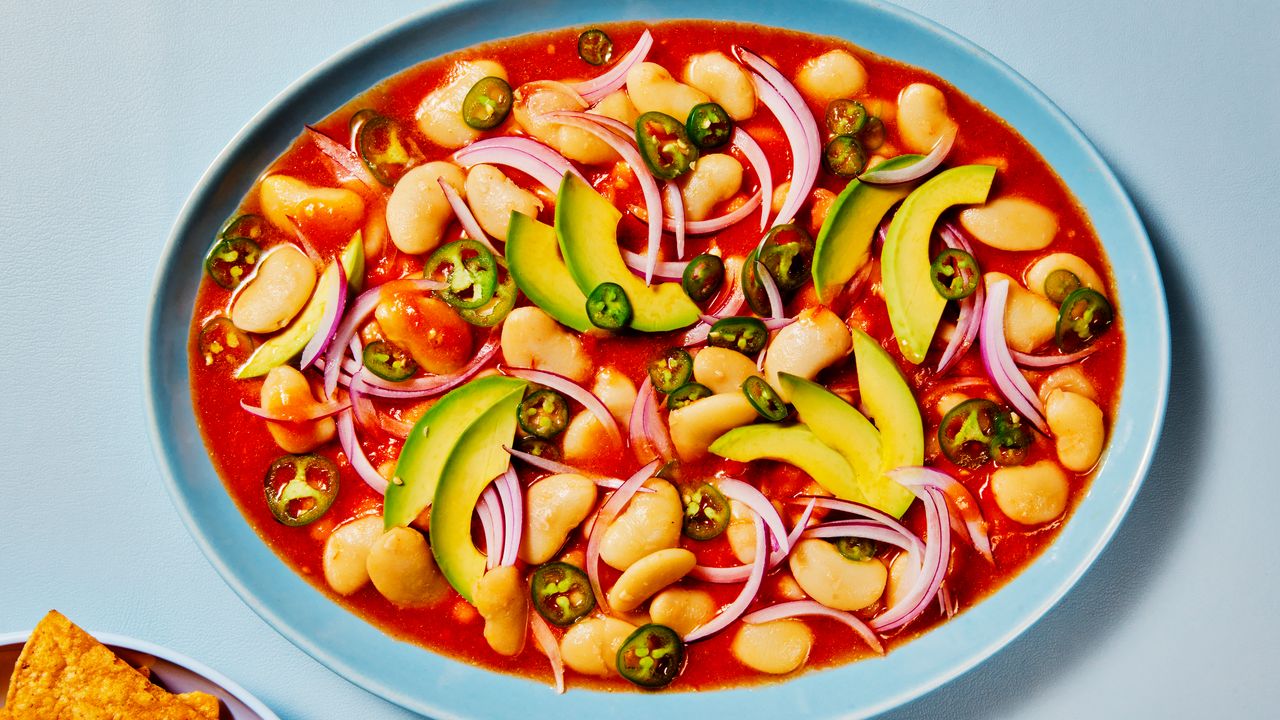
When the weather gets too warm to turn on the stove, ceviche offers a cooling respite. Typically made with high-quality raw fish or seafood “cooked” in citrus juice, this vegetarian version doesn’t require a trip to the fishmonger—and is far cheaper. Turn to a trusty can of fat butter beans for the base of the dish. The bigger and “meatier” the bean, the more reminiscent this dish will be of proper ceviche—you could even cook your own gigante, corona, or white lima beans from dry; but any can of white beans will suffice in a pinch.
Inspired by Ecuadorian and Mexican shrimp ceviches, which feature a soup-like broth, you’ll blend a large, ripe tomato (if you can’t find a nice heirloom, use smaller Campari or Kumato tomatoes, which are sweet and juicy year-round), then stir in lime juice and hot sauce for a powerful bean-marinating liquid. While you could add toppings—sliced jalapeño and red onion for heat, offset with buttery avocado—immediately and chow down with a bag of chips, the longer the beans sit in the tomato mixture, the more flavor they’ll absorb.
PakarPBN
A Private Blog Network (PBN) is a collection of websites that are controlled by a single individual or organization and used primarily to build backlinks to a “money site” in order to influence its ranking in search engines such as Google. The core idea behind a PBN is based on the importance of backlinks in Google’s ranking algorithm. Since Google views backlinks as signals of authority and trust, some website owners attempt to artificially create these signals through a controlled network of sites.
In a typical PBN setup, the owner acquires expired or aged domains that already have existing authority, backlinks, and history. These domains are rebuilt with new content and hosted separately, often using different IP addresses, hosting providers, themes, and ownership details to make them appear unrelated. Within the content published on these sites, links are strategically placed that point to the main website the owner wants to rank higher. By doing this, the owner attempts to pass link equity (also known as “link juice”) from the PBN sites to the target website.
The purpose of a PBN is to give the impression that the target website is naturally earning links from multiple independent sources. If done effectively, this can temporarily improve keyword rankings, increase organic visibility, and drive more traffic from search results.