It’s That Simple is our series about recipes so easy, you can make them with your eyes closed. Think tiny ingredient lists, laid-back techniques, and results so delicious you’ll text home about them.
Inspired by Contramar’s iconic tuna tostada, this budget-friendly version swaps in jarred or canned tuna for the sushi-grade fish used at the restaurant. Take care not to overmix; keeping some larger pieces of tuna in the mix ensures a more satisfying texture, rather than something closer to tuna salad (delicious, just not the goal here).
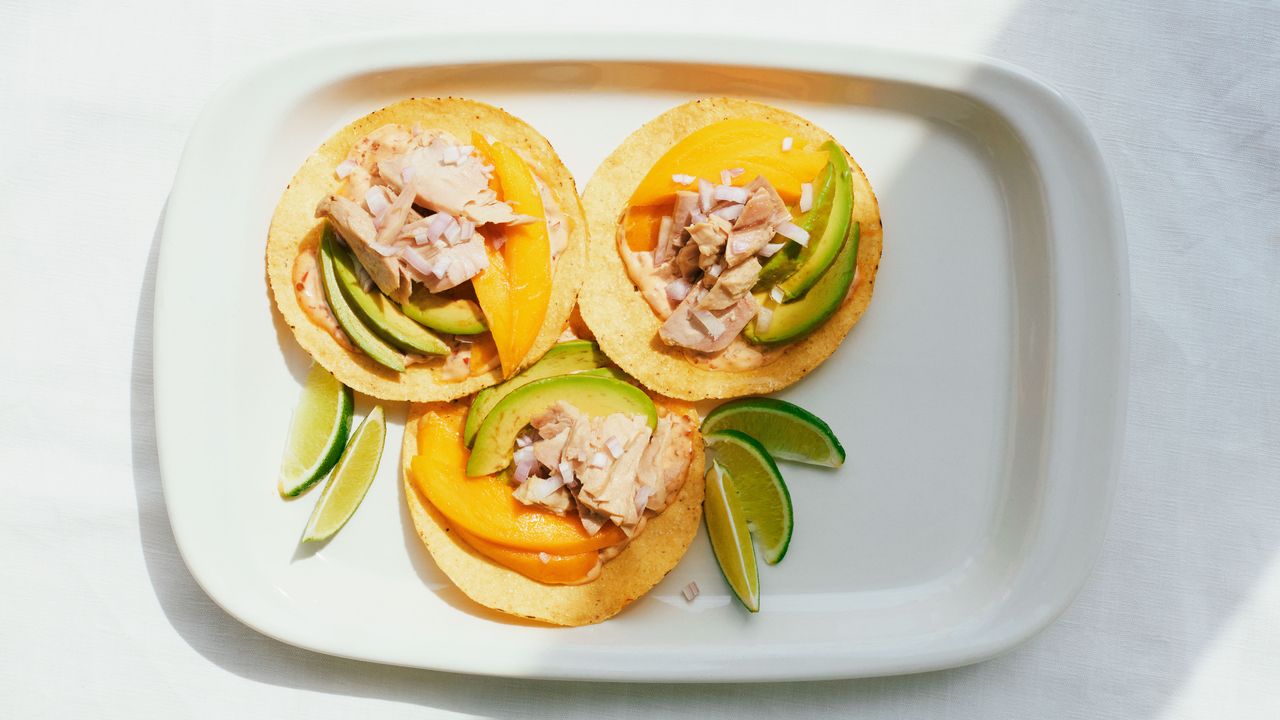
Crispy tostada shells get a swoosh of smoky chipotle mayo, plus fanned slices of juicy mango and creamy avocado. It all gets topped with the bright, punchy tuna mixture. Serve with extra lime wedges, and you’ve got an impressive party appetizer or an easy, no-cook meal.
Read More: These Smoky Tuna Tostadas Are Delightfully Easy (and Cheap)
Tips for making tuna tostadas
Can I use water-packed tuna instead of oil-packed? Stick to oil-packed for this recipe. First, the tuna will have a silkier, richer texture. Secondly, the oil serves as a secondary ingredient—mixed with fresh lime juice, it forms a vibrant dressing for the fish.
Can I prep the tuna mixture ahead of time? Stored in the refrigerator, the tuna mixture will keep for up to 2 days. Keep it tightly covered.
I don’t like mango—can I use something else? A ripe peach or very tender pear would work well. Thinly slice and fan it over the tostadas just as you would the mango.
How do I keep the tostadas from getting soggy? Assemble just before serving. Wait until the last minute to add the toppings so the shells stay crisp.
PakarPBN
A Private Blog Network (PBN) is a collection of websites that are controlled by a single individual or organization and used primarily to build backlinks to a “money site” in order to influence its ranking in search engines such as Google. The core idea behind a PBN is based on the importance of backlinks in Google’s ranking algorithm. Since Google views backlinks as signals of authority and trust, some website owners attempt to artificially create these signals through a controlled network of sites.
In a typical PBN setup, the owner acquires expired or aged domains that already have existing authority, backlinks, and history. These domains are rebuilt with new content and hosted separately, often using different IP addresses, hosting providers, themes, and ownership details to make them appear unrelated. Within the content published on these sites, links are strategically placed that point to the main website the owner wants to rank higher. By doing this, the owner attempts to pass link equity (also known as “link juice”) from the PBN sites to the target website.
The purpose of a PBN is to give the impression that the target website is naturally earning links from multiple independent sources. If done effectively, this can temporarily improve keyword rankings, increase organic visibility, and drive more traffic from search results.